





What Makes Artificial Wedding Flowers Look Real?
For many brides, the biggest question about artificial wedding flowers is whether they can truly look and feel real.
While faux flowers offer practical benefits like flexibility and year-round availability, today’s couples are looking for more than convenience. They want floral designs that feel elegant, natural, and thoughtfully created.
What Makes Artificial Wedding Flowers Look Real?
Realistic artificial wedding flowers are not defined by a single detail, but by how every element works together. Just like fresh floral design, a convincing arrangement depends on the balance between materials, flower varieties, textures, colors, and overall composition.
A lifelike flower is only the foundation. The way different blooms are combined, layered, and styled determines whether an arrangement feels natural, elegant, and thoughtfully designed.
In the following sections, we’ll explore the key elements behind high-quality artificial wedding flowers — from realistic materials and floral composition to color balance and design style.
Great Artificial Wedding Flowers Start with Better Materials
The foundation of realistic artificial wedding flowers begins with choosing the right materials. Different materials create different textures, movements, and visual effects — allowing designers to achieve a more natural and refined floral appearance.
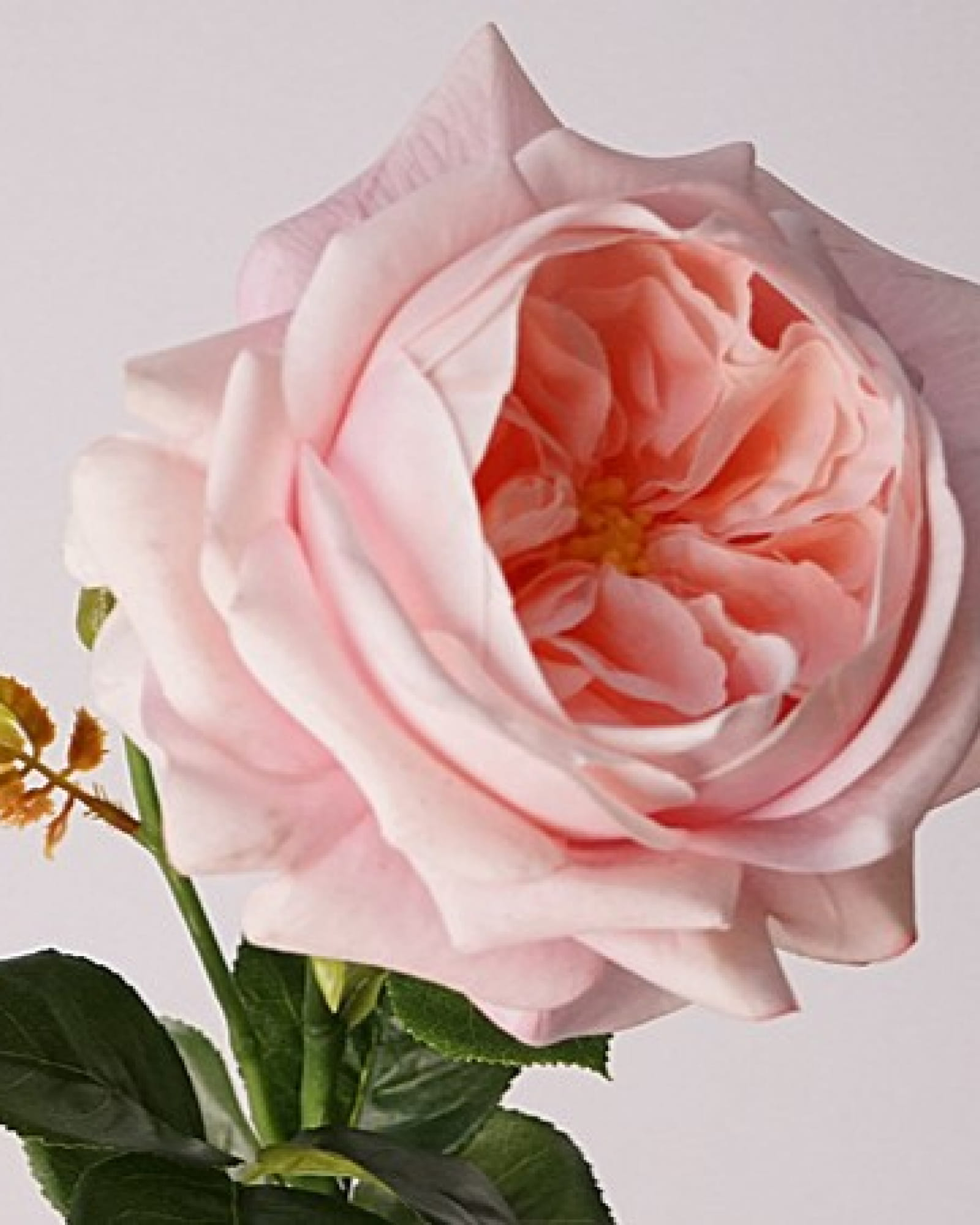
Real Touch Flowers
Designed with a specialized coating, real touch flowers offer a fresh, velvety feel that closely resembles the texture of natural blooms, making them especially effective for close-up arrangements.
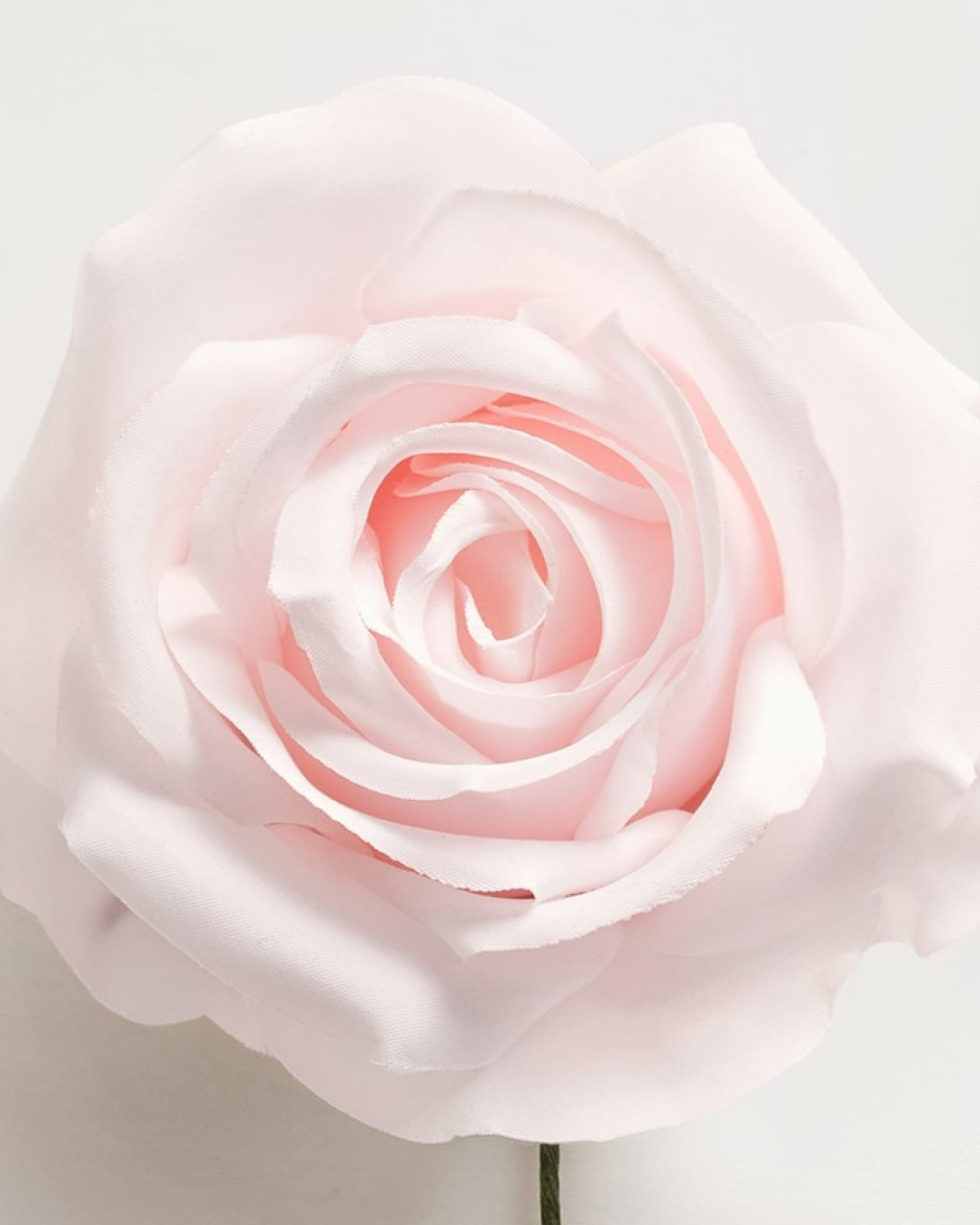
Silk / Fabric Flowers
Known for their soft texture and graceful movement, fabric flowers are ideal for creating delicate petals and flowing floral designs.
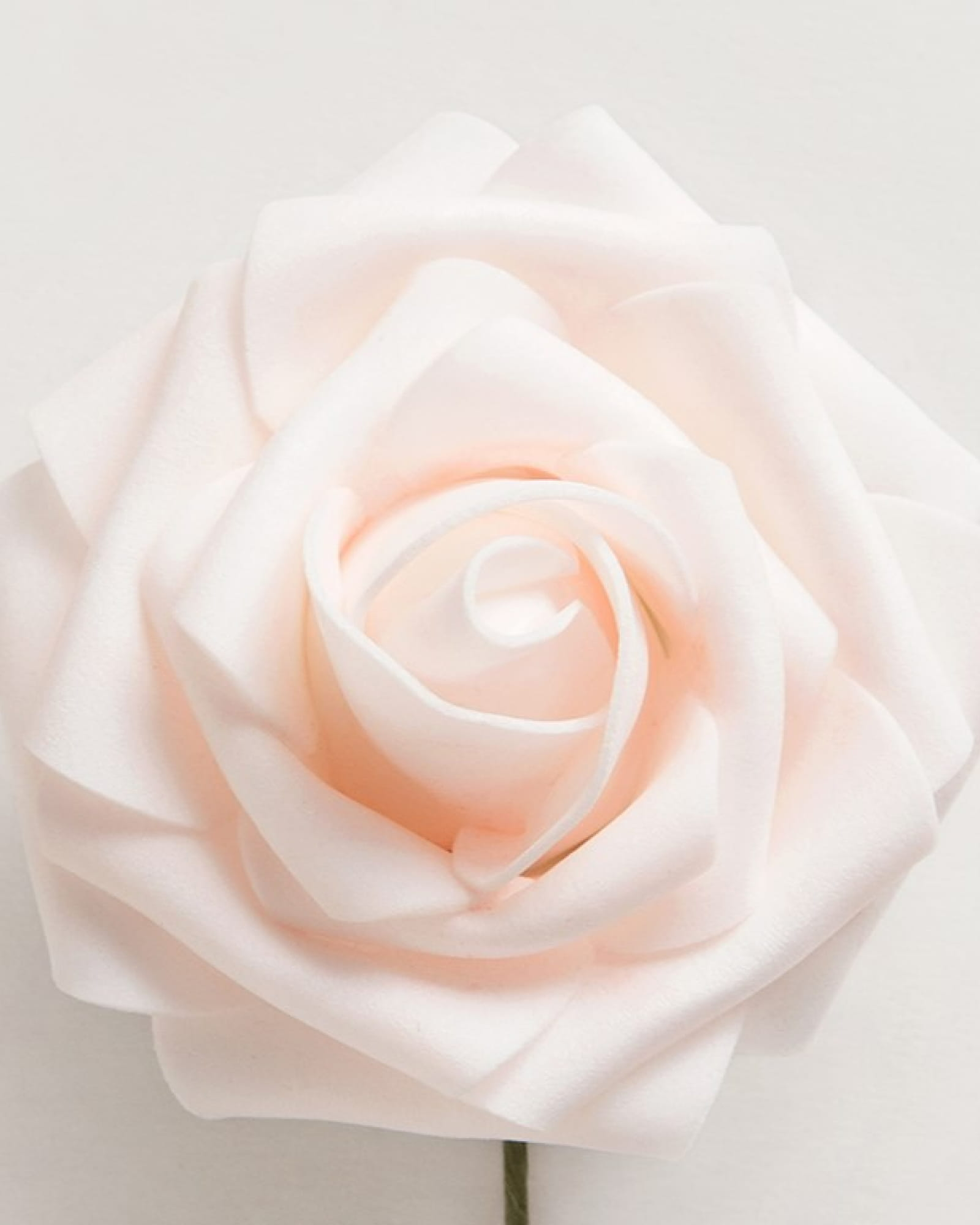
Foam Flowers
With a smooth, soft-touch surface, foam flowers offer a fuller, more defined appearance, making them well suited to blooms with rounded petals and pronounced forms.
How to Tell If Single Stem Artificial Flower Look High-Quality
When choosing artificial wedding flowers, look beyond the material name. These details can help you judge whether a flower feels realistic and photographs naturally
What to Look For |
Signs of High‑Quality Artificial Flowers |
|
Petal Edges |
Petals have natural curves and subtle irregularities rather than perfectly uniform edges. Silk flowers should also be cleanly finished, without visible fraying, loose threads, or rough edges. |
Color Gradation |
Colors transition naturally across the petal, with subtle variations around the center, edges, or deeper areas rather than one flat, uniform shade. |
Natural Texture |
Petals show fine surface texture, veins, or other tactile details instead of appearing completely smooth like molded plastic. |
| Surface Sheen | The surface has a soft, natural finish rather than a harsh plastic‑like reflection, particularly under strong lighting or camera flash. |
These details are considered across our artificial flower collections, helping each bloom achieve a more natural appearance both in person and on camera.
Realism Comes from How Flowers Work Together
Even the most realistic individual flower cannot create a naturally designed arrangement on its own. Just like fresh floral design, artificial wedding flowers rely on the relationship between different blooms — their shapes, textures, sizes, and visual roles within the arrangement.
The same flower can create completely different moods depending on what it is paired with. A rose combined with small daisies may feel soft and garden-inspired, while a rose paired with cymbidium orchids can create a more modern, editorial look.
The artistry of faux floral design lies not only in recreating realistic flowers, but in understanding how each bloom contributes to the overall atmosphere.
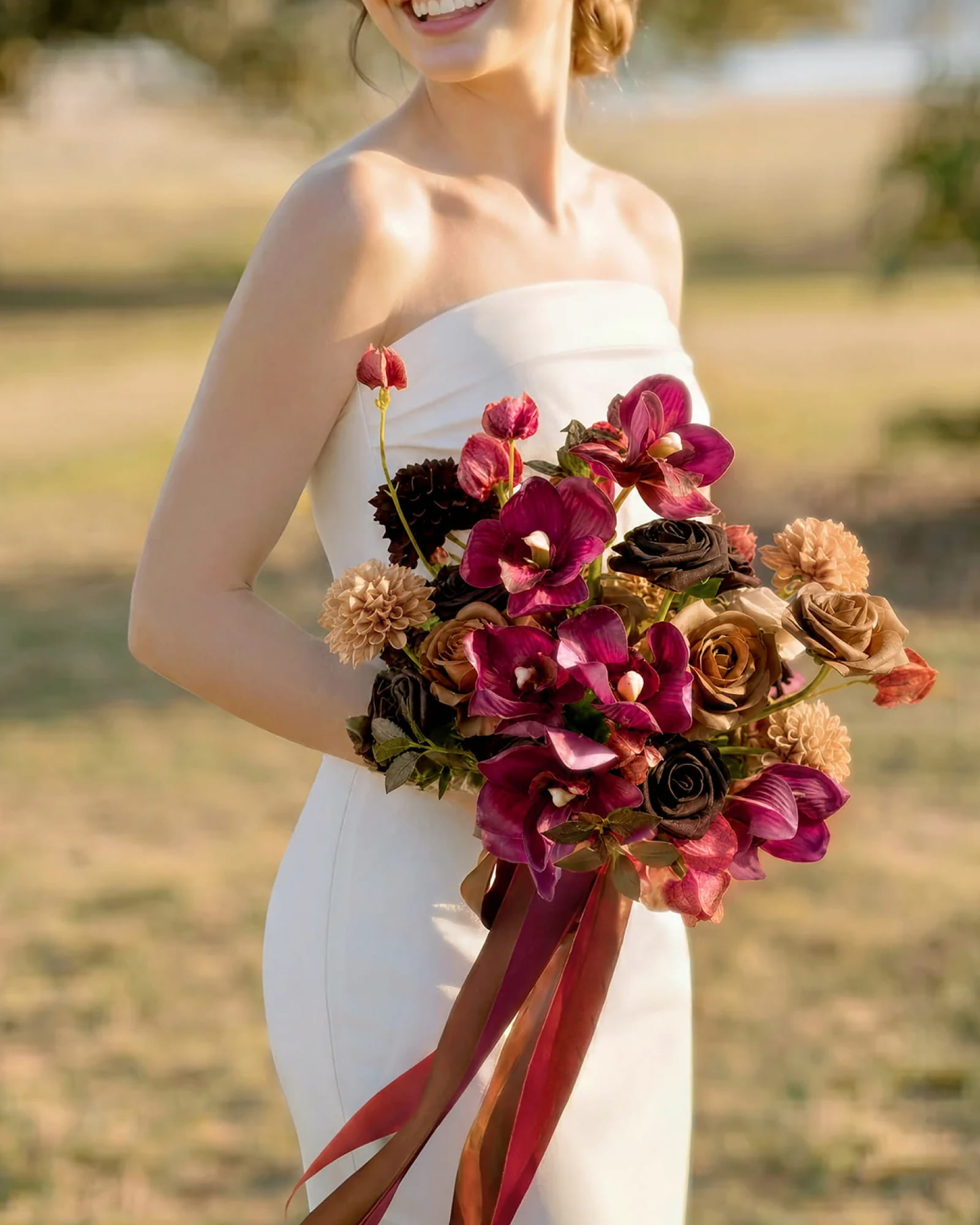
Natural Variation Makes Artificial Flowers Feel More Real
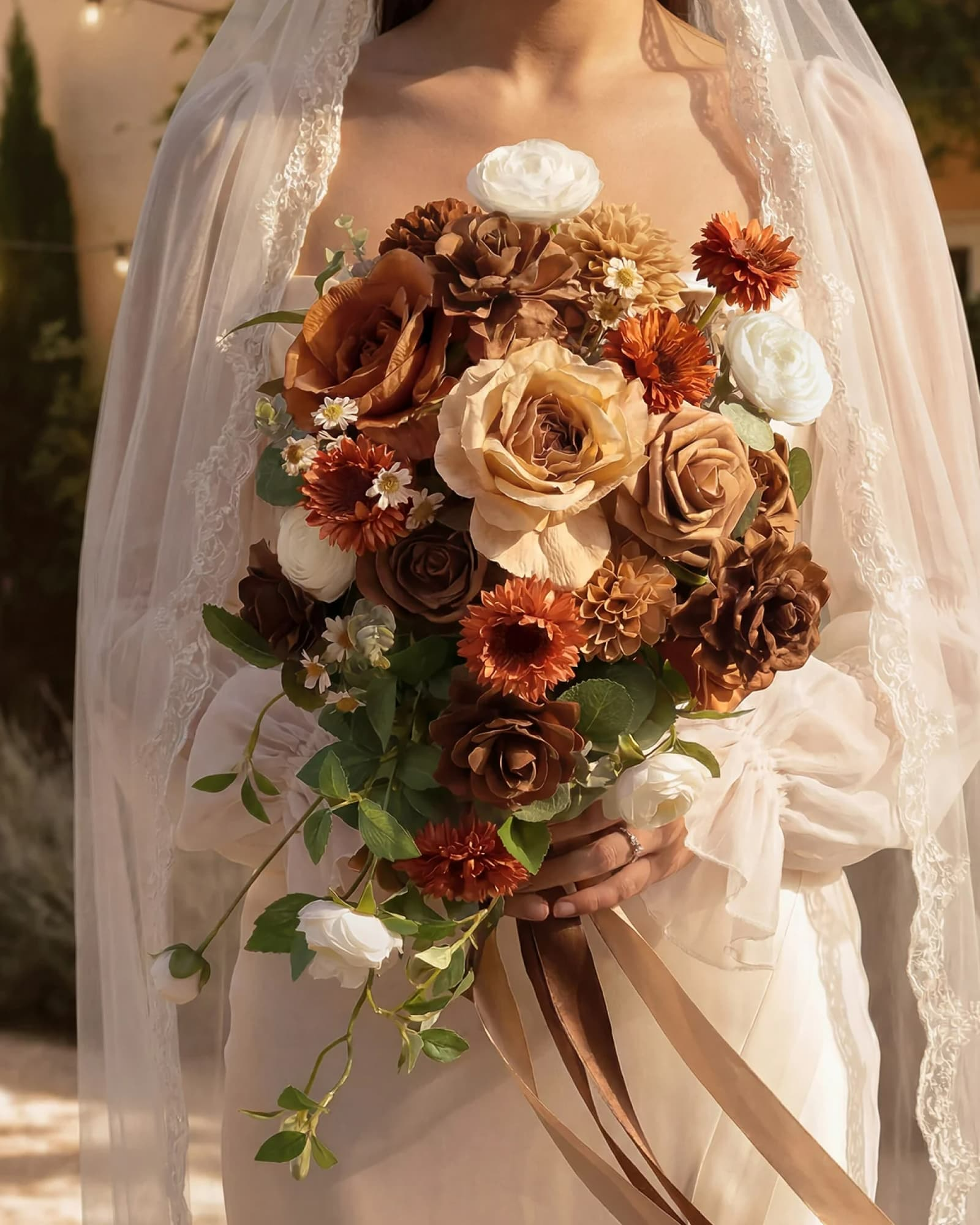
Fresh flowers rarely grow in perfect uniformity. Some blooms are fully open, others are smaller or partially closed, and their shapes naturally vary. Artificial arrangements can recreate this sense of variation through thoughtful floral layering.
Focal flowers create the main visual impact, secondary flowers add dimension, airy blooms bring softness and movement, while smaller accents complete the overall design.
By combining different bloom sizes, textures, and stages of growth, artificial wedding flowers can achieve the natural rhythm and layered beauty found in professionally designed fresh floral arrangements.
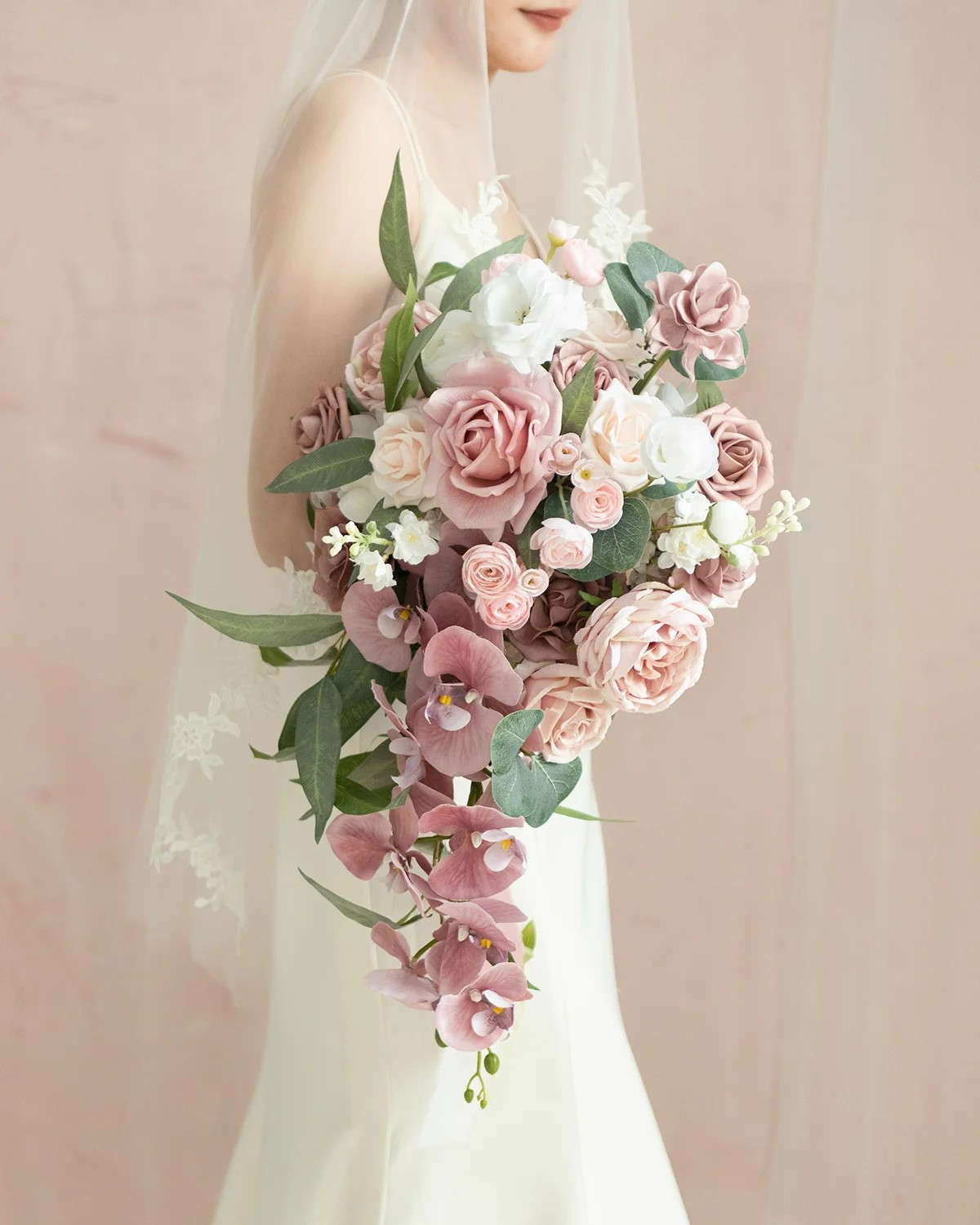
LING'S BRIDAL BOUQUET: Multi-layered depth and lifelike variety.
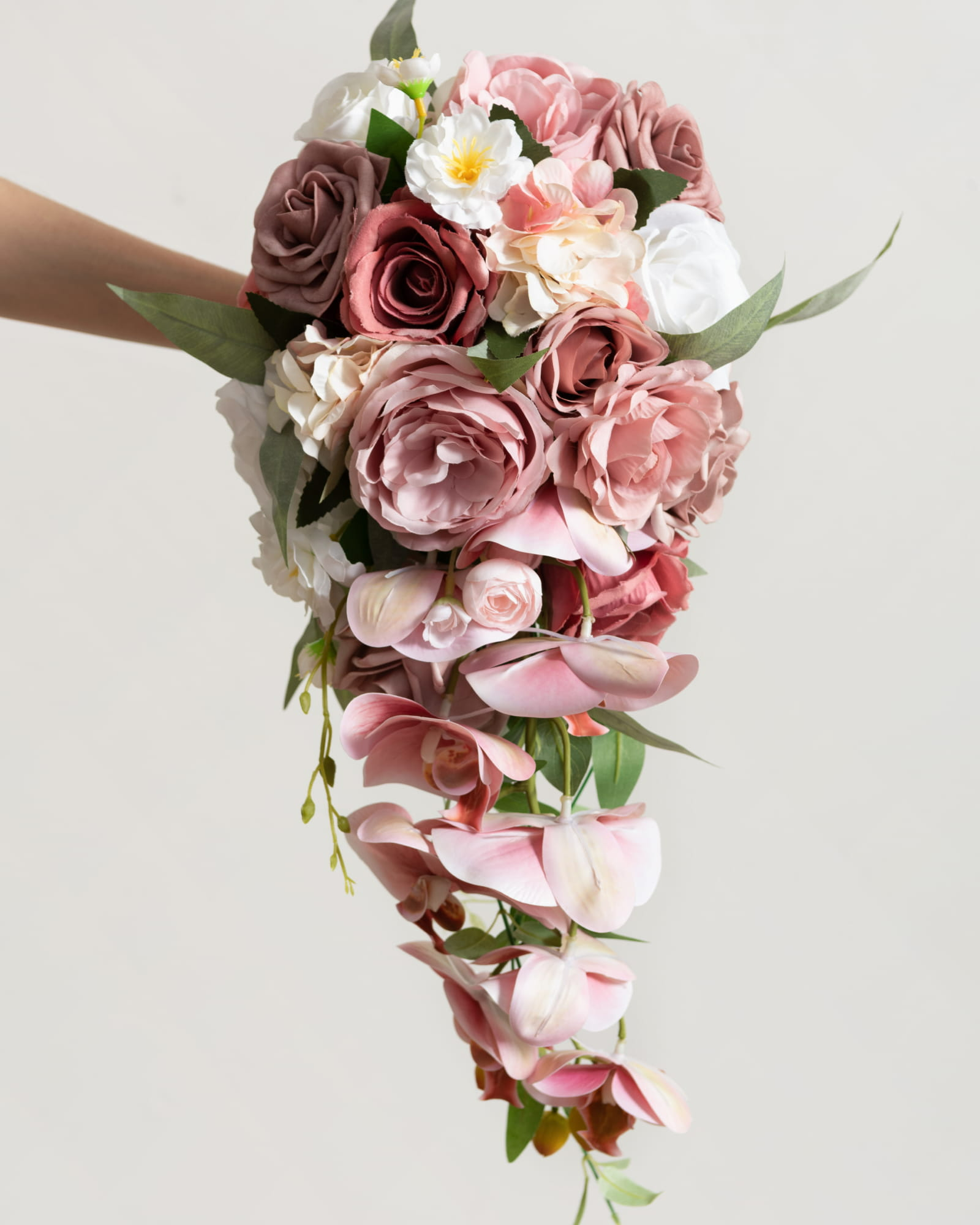
OTHER BRIDAL BOUQUET: Flat, one-dimensional, and uniform.
Natural Color Variation Adds Realism
Color can make an artificial arrangement feel cohesive and naturally composed. Rather than relying on one dominant shade or combining too many unrelated colors, a well-designed palette creates subtle relationships between deeper, softer, and supporting tones.
For example, our Berry Pink and Powder Pink palette uses soft pinks as the foundation, while deeper berry shades create focal points and cream details soften the transitions between them. Sage green accents add another layer, connecting the palette to the organic feeling of a garden-inspired arrangement.
The goal is not simply to use more colors, but to give each tone a role within the overall composition. When colors flow naturally from one element to another, the arrangement feels more dimensional and less artificially assembled.
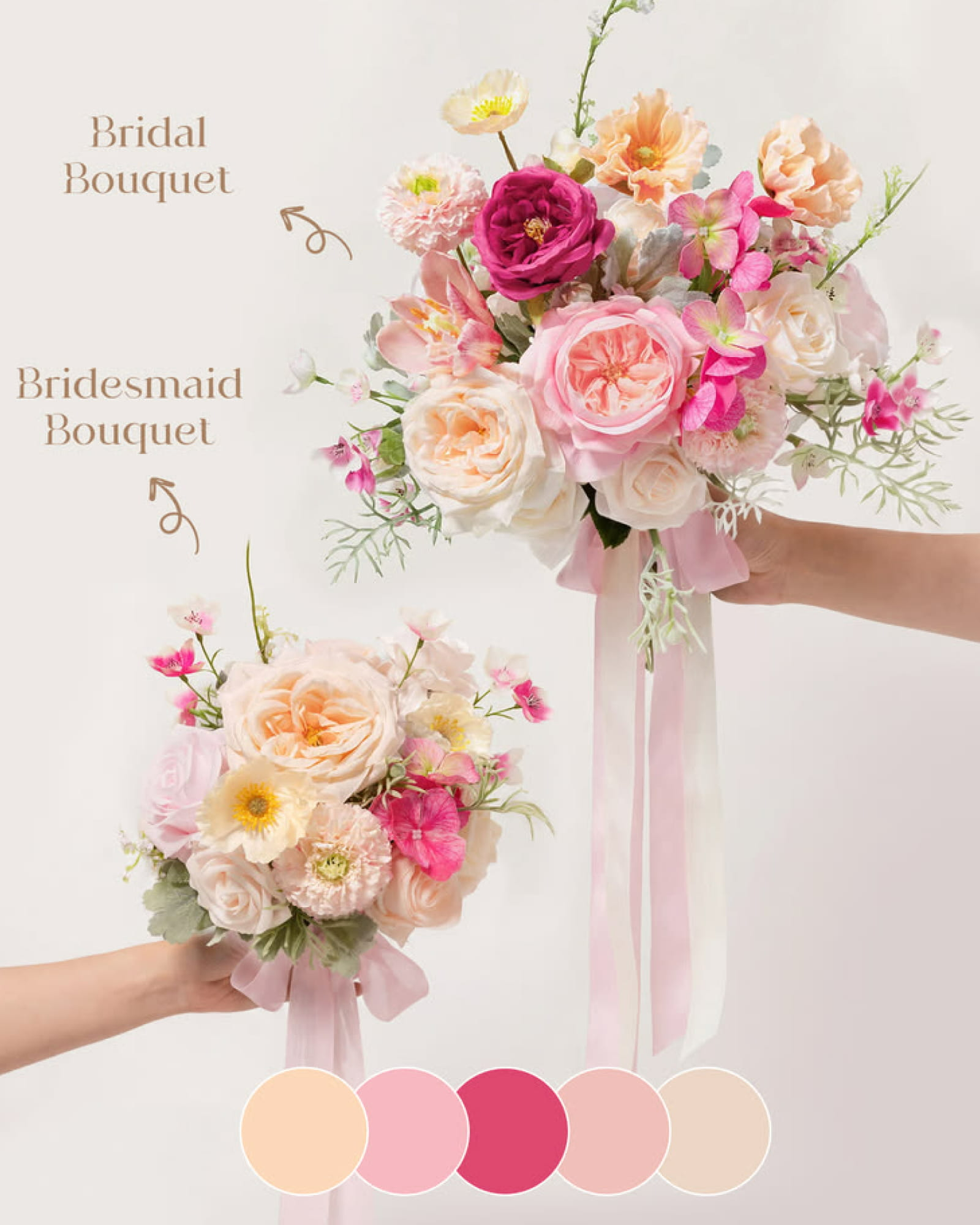
Realism Comes from the Whole Arrangement
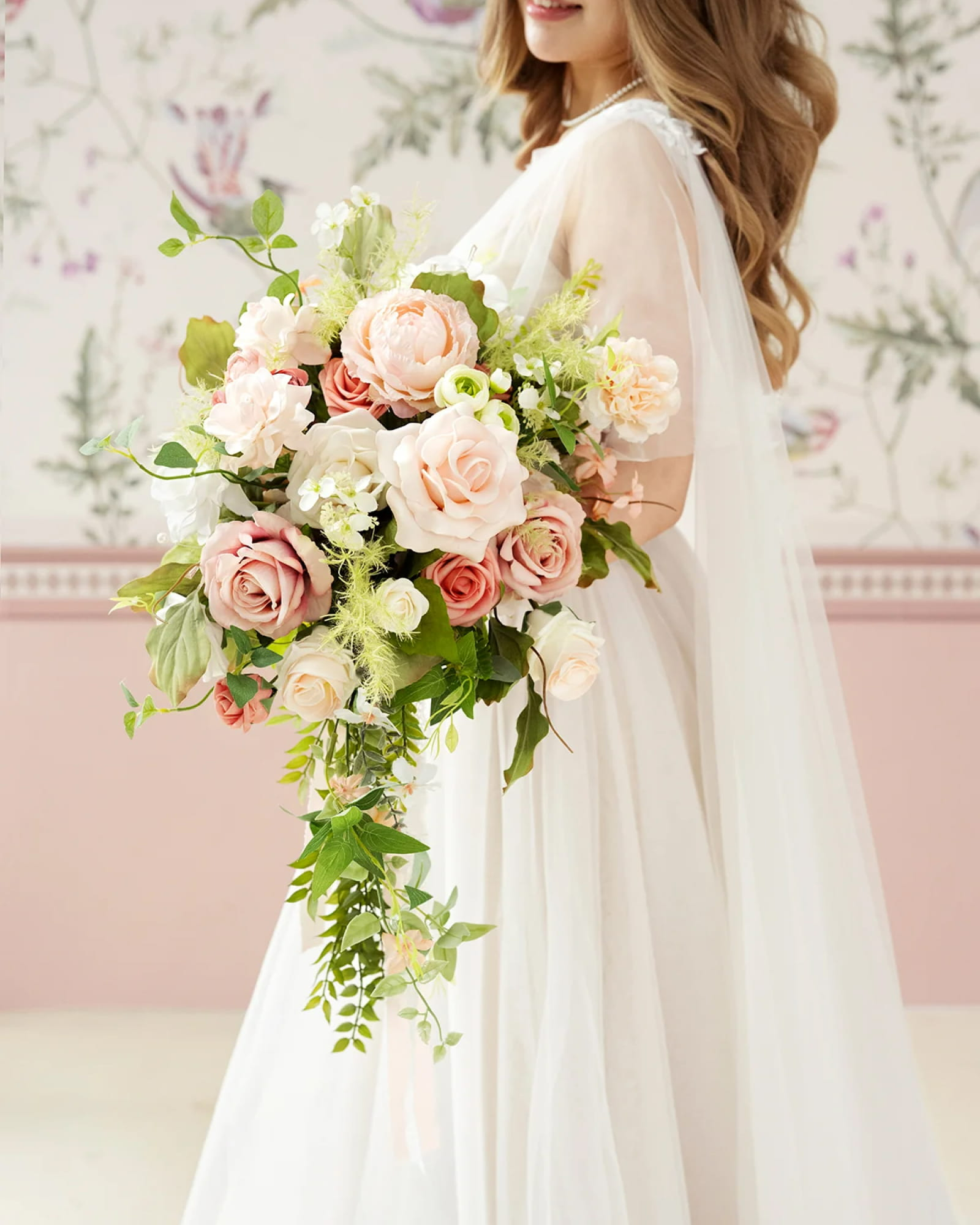
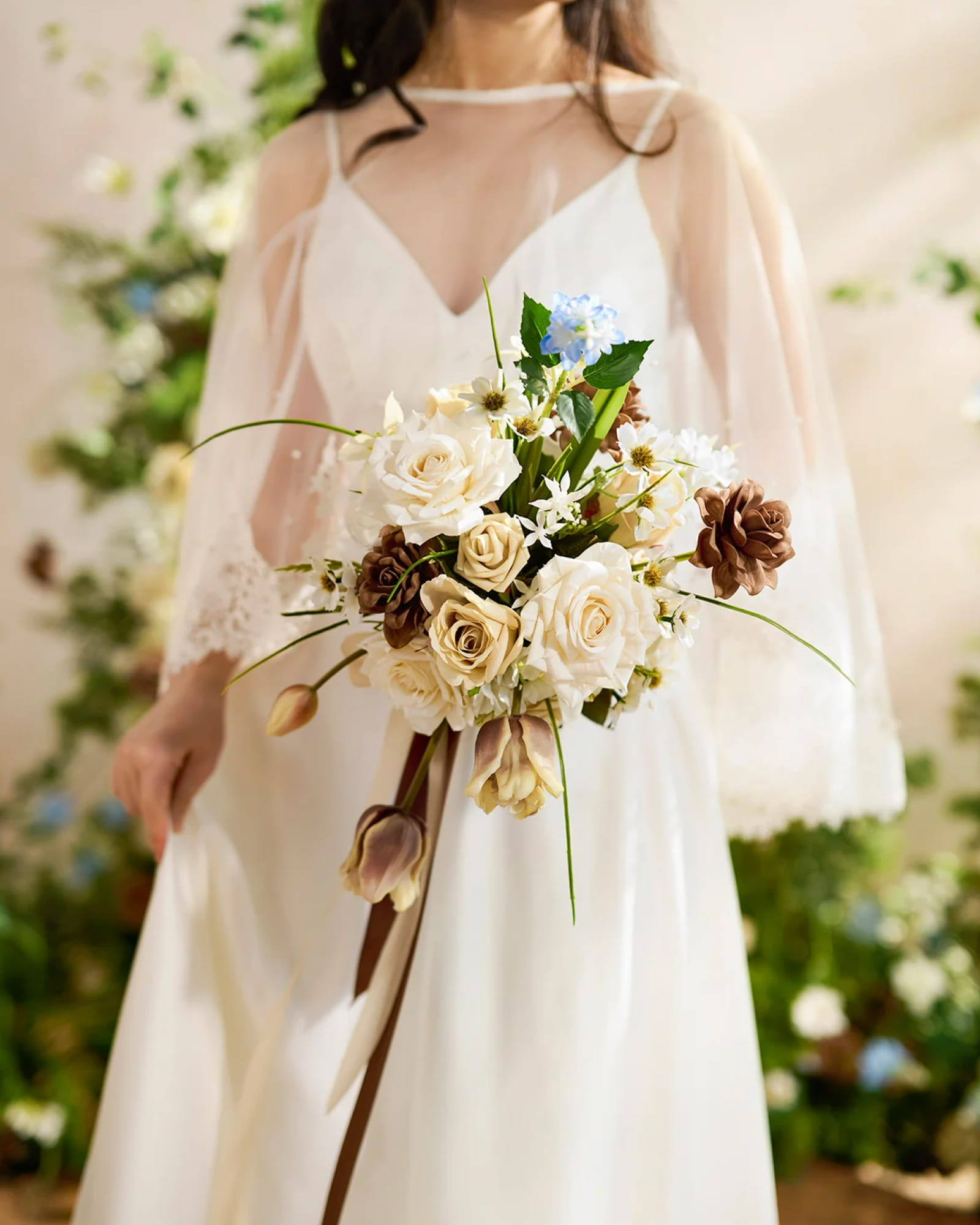
The final aesthetic of a artificial floral arrangement comes from how every element works together. The same flowers and colors can create completely different impressions depending on the composition, proportions, and styling approach.
Soft arrangements with flowing shapes may create a romantic garden atmosphere, while structured designs with refined lines can feel more modern and editorial. These design choices allow artificial wedding flowers to adapt to different wedding visions while maintaining a thoughtful and cohesive look.
Small Details Make a Difference
The difference between an ordinary faux arrangement and a highly finished one often comes down to the details that are easy to overlook. Realism is not only about what catches the eye from the front, but also about how the arrangement is finished from every angle.
For example, our bouquets feature a foliage-wrapped base, with lush greenery seamlessly covering the underside to create a fuller, more polished appearance. The handle is also finished with a realistic stem end cap — a green casing designed to resemble the appearance of freshly cut stems when viewed from below.
These finishing details may not be the first thing you notice, but they help the entire arrangement feel intentionally crafted rather than simply assembled.
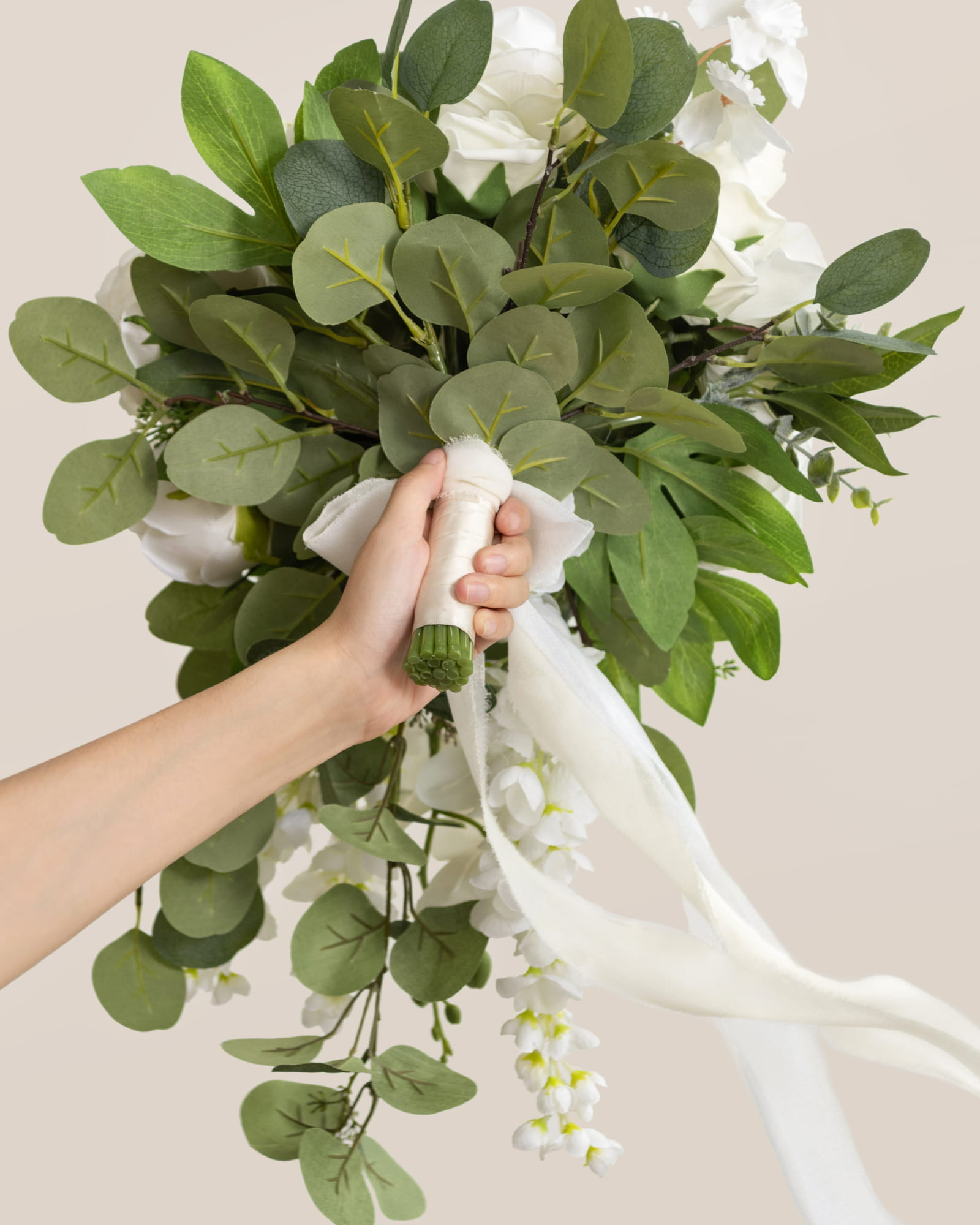
LING'S BRIDAL BOUQUET: Foliage-wrapped base creates a full, lush appearance.
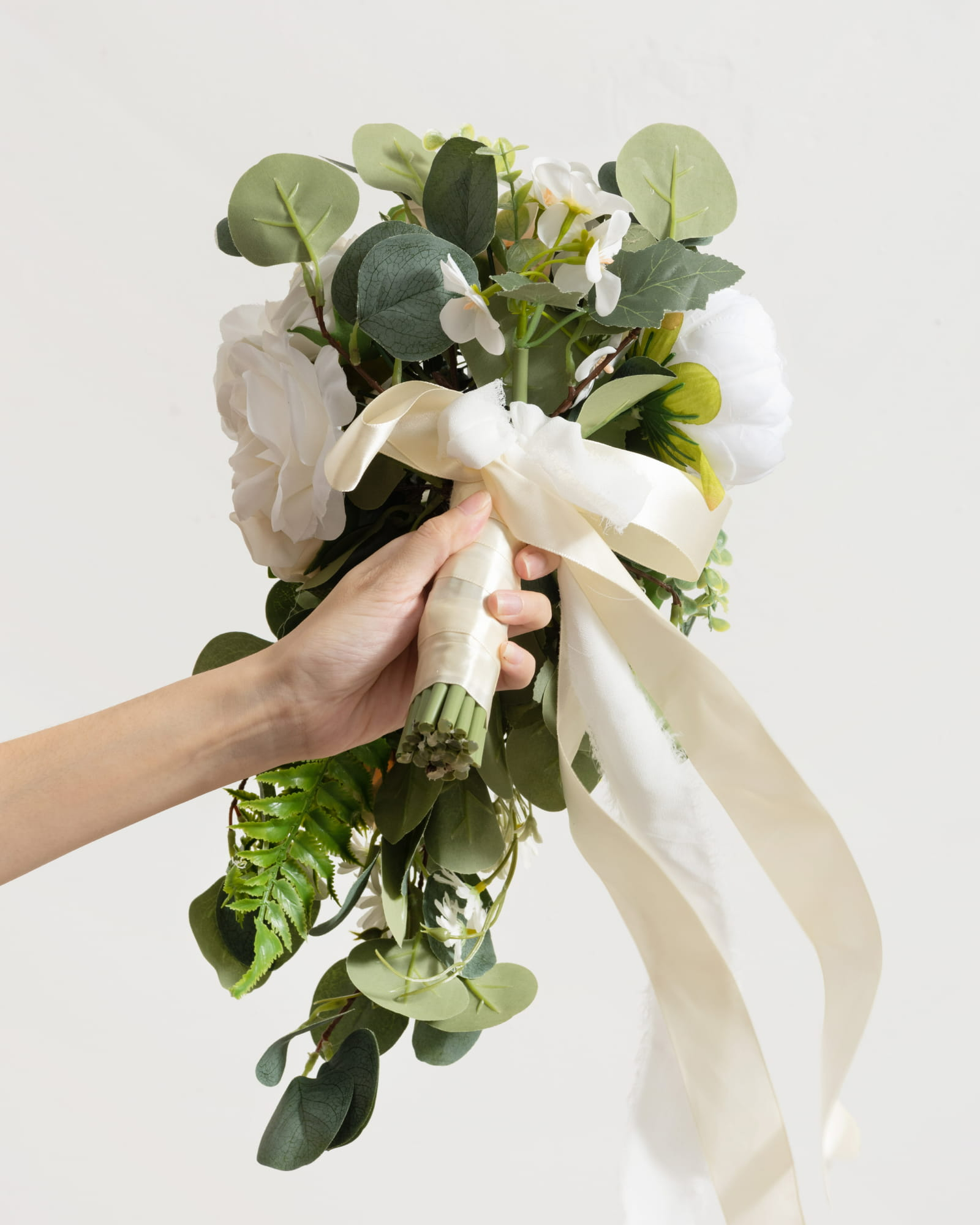
OTHER BRIDAL BOUQUET: Thin base with visible stems and gaps.
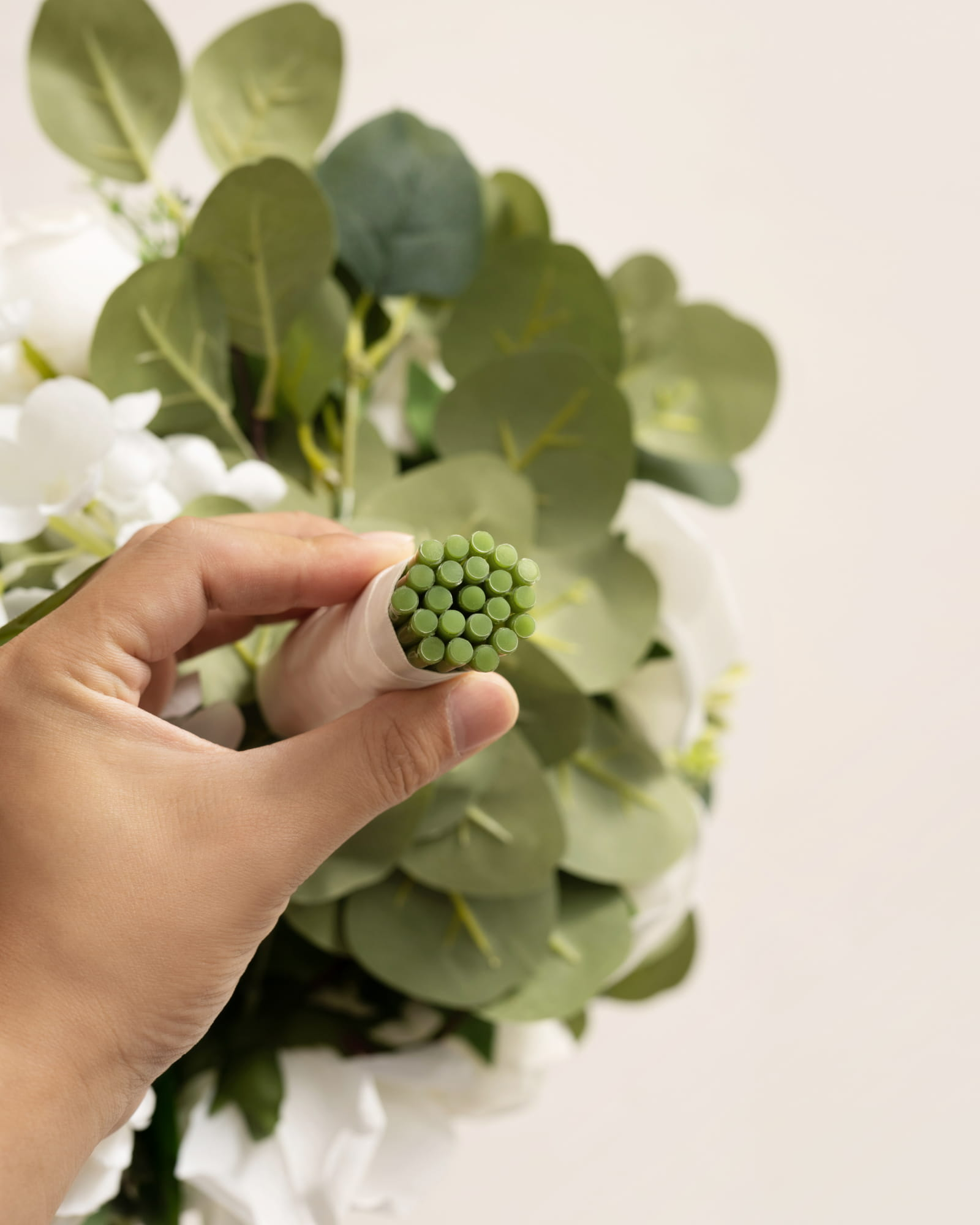
LING'S BRIDAL BOUQUET: Neat end cap mimics fresh-cut realistic stems.
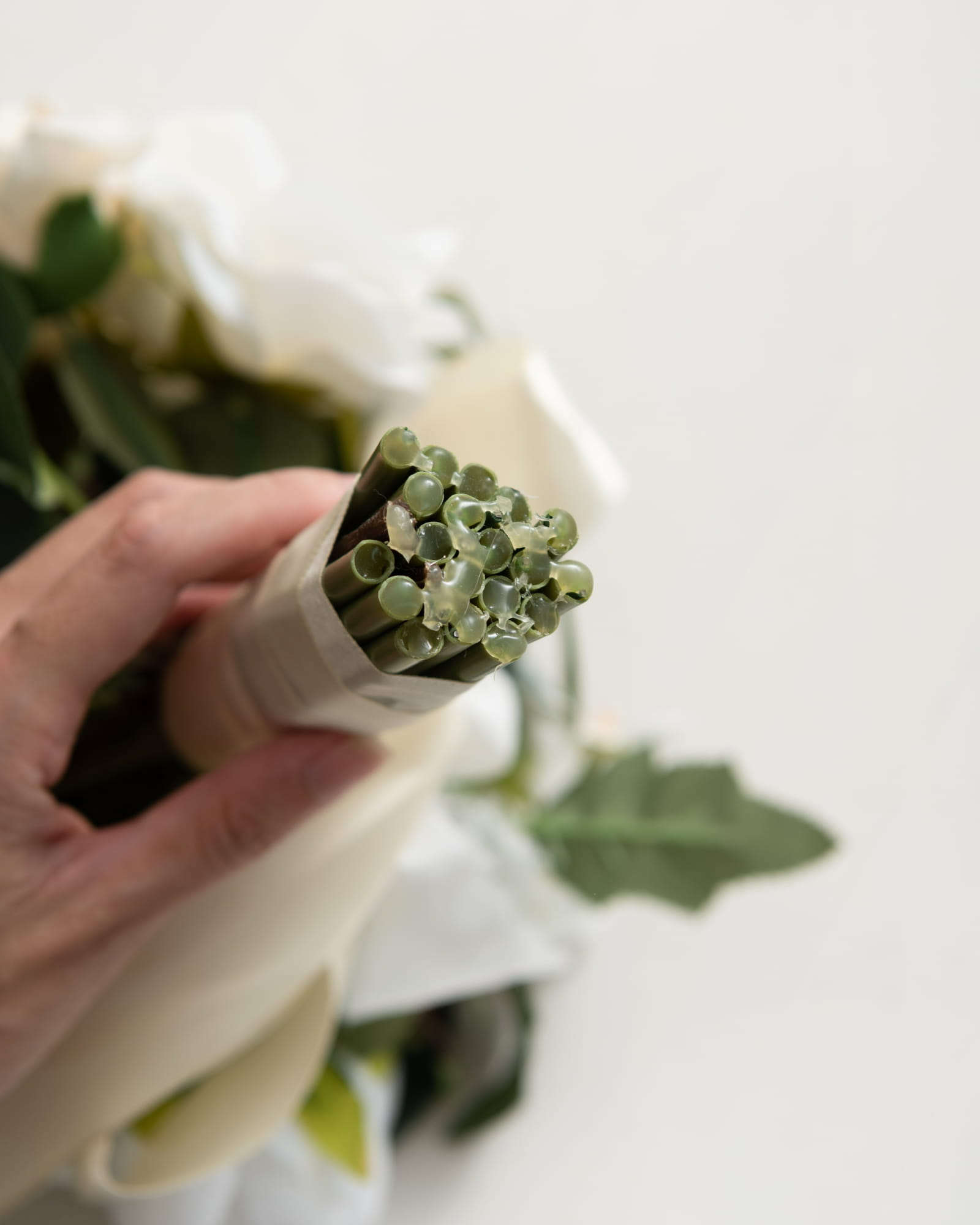
OTHER BRIDAL BOUQUET: Messy glue and uneven stems look unrefined.
Beyond What Real Flowers Can Do
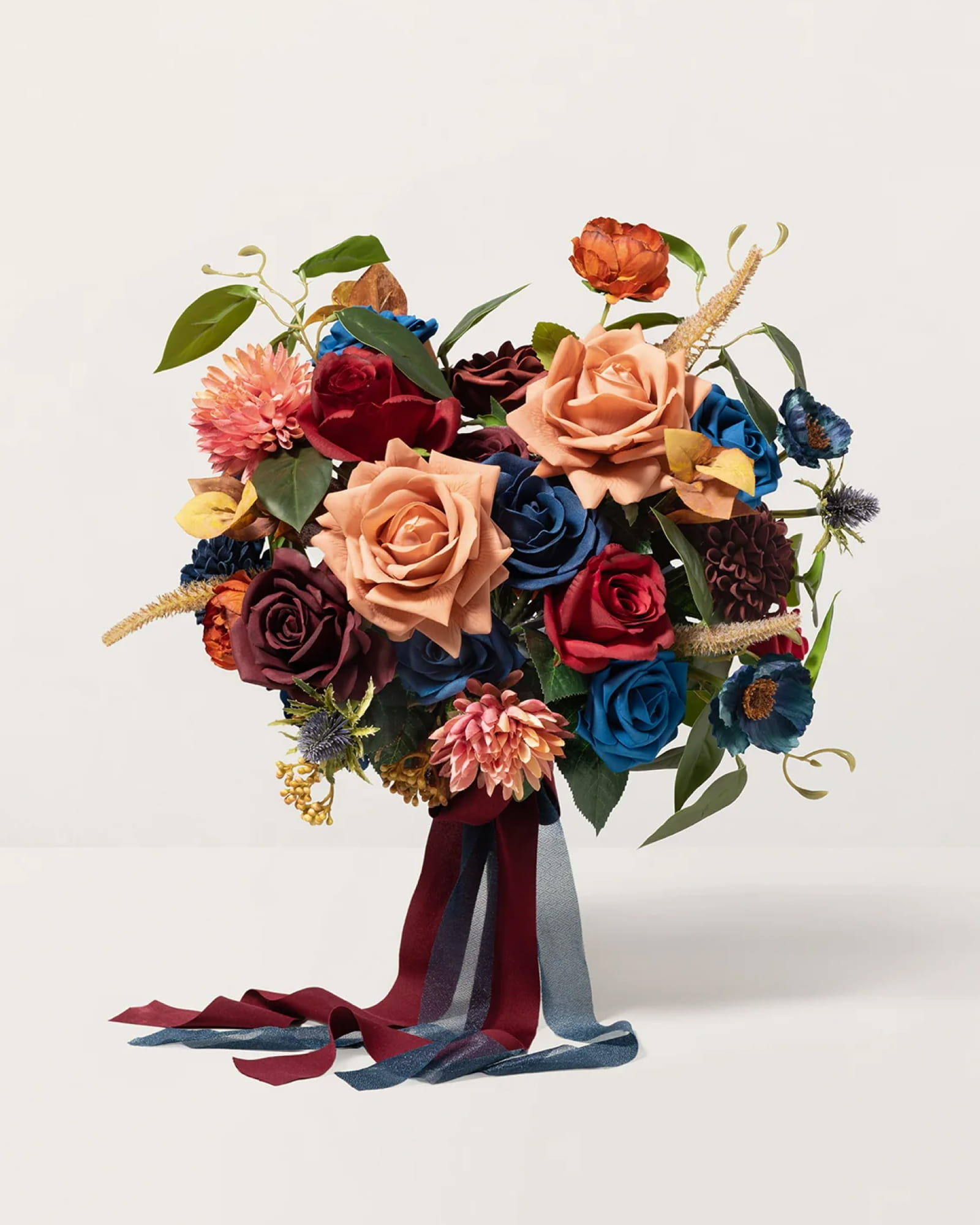
Artificial wedding flowers offer more than a realistic alternative to fresh blooms. They also give couples greater creative freedom, especially when working with unusual colors, specific design concepts, or flowers that may be difficult to source in a particular season.
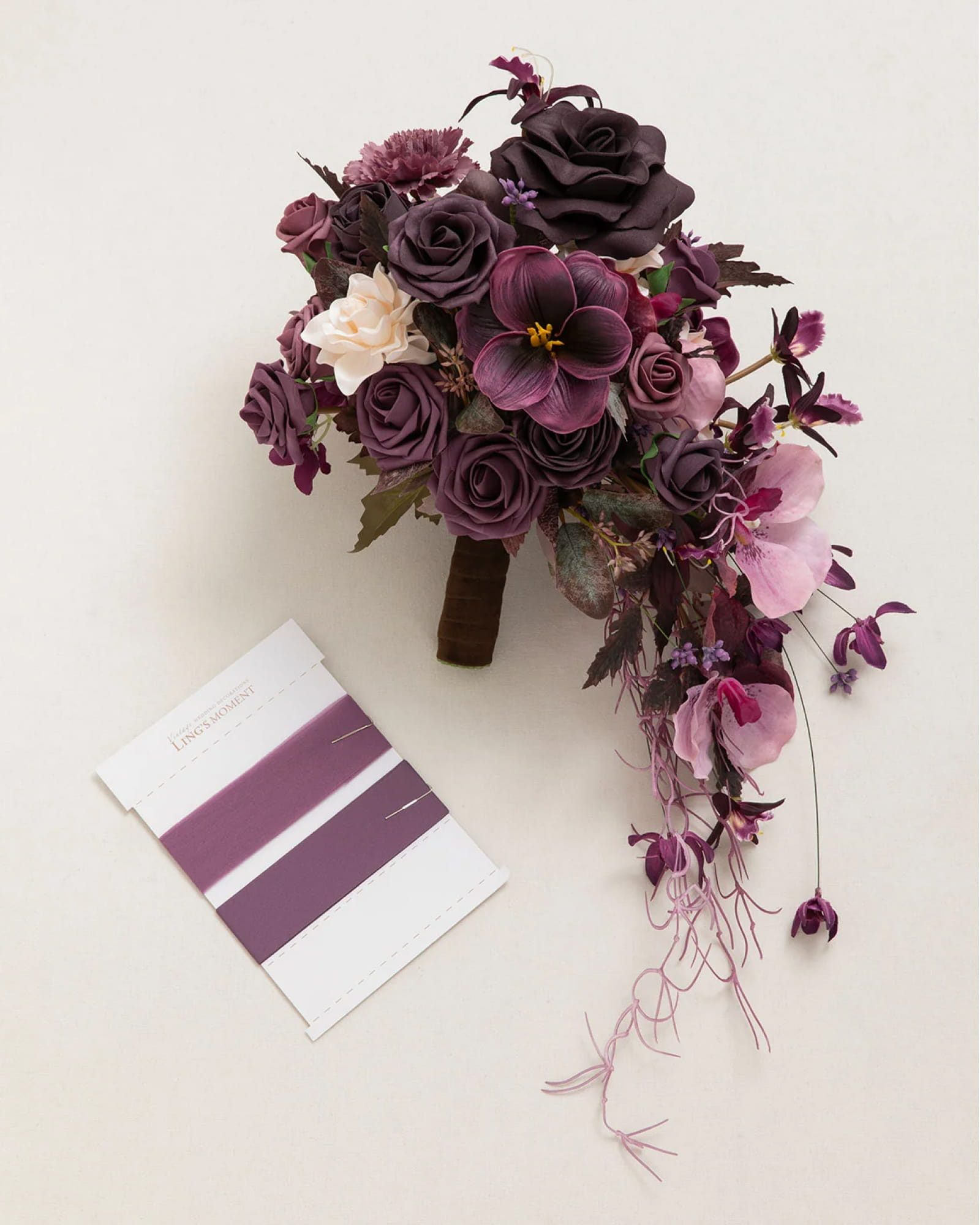
A palette built around plum, deep berry, or other jewel tones, for example, can be developed with greater consistency across bouquets, ceremony arrangements, and reception details. This flexibility allows couples to design around their vision first, rather than adjusting it to what happens to be in season.
For modern weddings, that creative freedom is part of the appeal. Artificial flowers can preserve the beauty and character of floral design while opening up possibilities that fresh blooms cannot always provide.
Redefining What Artificial Wedding Flowers Can Be
What makes an artificial wedding flower arrangement feel as refined as a fresh floral design is not one perfectly realistic bloom. It is the combination of thoughtful materials, natural textures and finishes, varied floral shapes and layers, balanced color relationships, and a composition that feels intentionally designed rather than assembled.
When these details work together, artificial flowers can achieve the depth, movement, and visual richness we naturally appreciate in fresh arrangements. The result is not simply a convincing imitation, but a floral design that feels complete in its own right.
For couples rethinking artificial wedding flowers, that may be the most important shift: the goal is no longer to make faux flowers look like something they are not, but to create beautiful floral arrangements without compromising on the qualities that make fresh flowers so captivating.
Q & A
Can artificial wedding flowers be mixed with fresh flowers?
Yes. Artificial and fresh flowers can be combined in the same wedding flower design. Using them selectively can help create a consistent look while allowing couples to prioritize fresh blooms where they matter most and use artificial flowers for elements that need to be prepared or transported in advance.
What happens to artificial wedding flowers after the wedding?
Unlike fresh flowers, artificial wedding flowers can be kept and reused long after the celebration. Couples can preserve their bouquets, repurpose arrangements as home décor, reuse individual flowers for future celebrations, or resell them to other couples planning their weddings. This makes artificial flowers a more lasting part of the wedding investment rather than something designed to be used only once.


