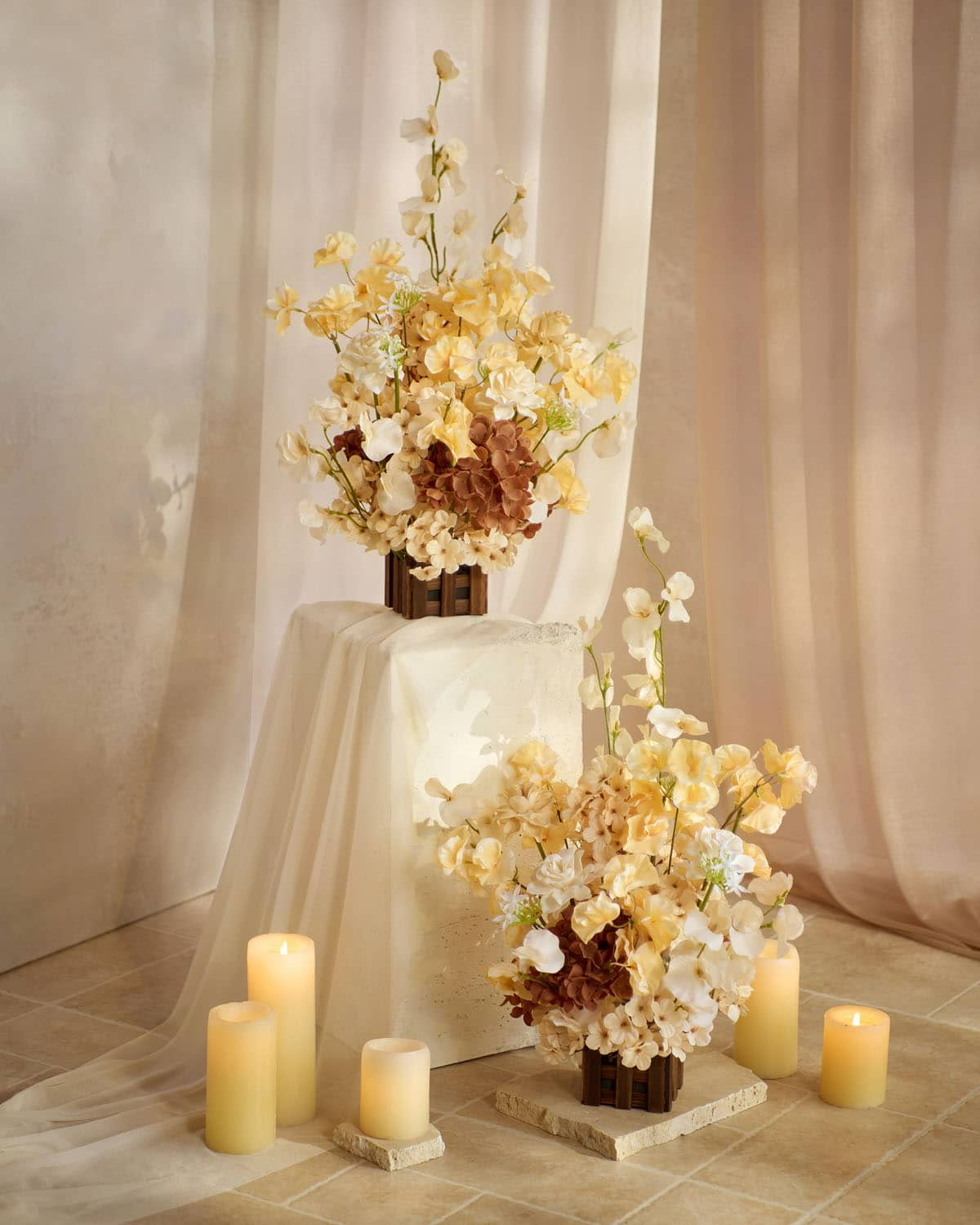





A Spring Wedding Design Guide in Earth Brown & Butter Yellow
Every spring wedding presents the same quiet question for us as designers: how to keep the atmosphere light and fresh, without letting it drift into something overly sweet or predictable.
For this celebration, the answer came through contrast—pairing soft, luminous tones with grounded, earthy ones, and allowing each to support the other rather than compete for attention. We built the palette around cream, beige, and butter yellow, then carefully introduced earth brown and almond as anchoring notes. The result is a feeling that is seasonal but not fragile—chic, airy, and intentionally composed, especially within the textured, timeworn architecture of a historic venue.
Balancing the Color Palette Through Bridal Party Styling
DEFINING STRUCTURE THROUGH THE BRIDE’S LOOK
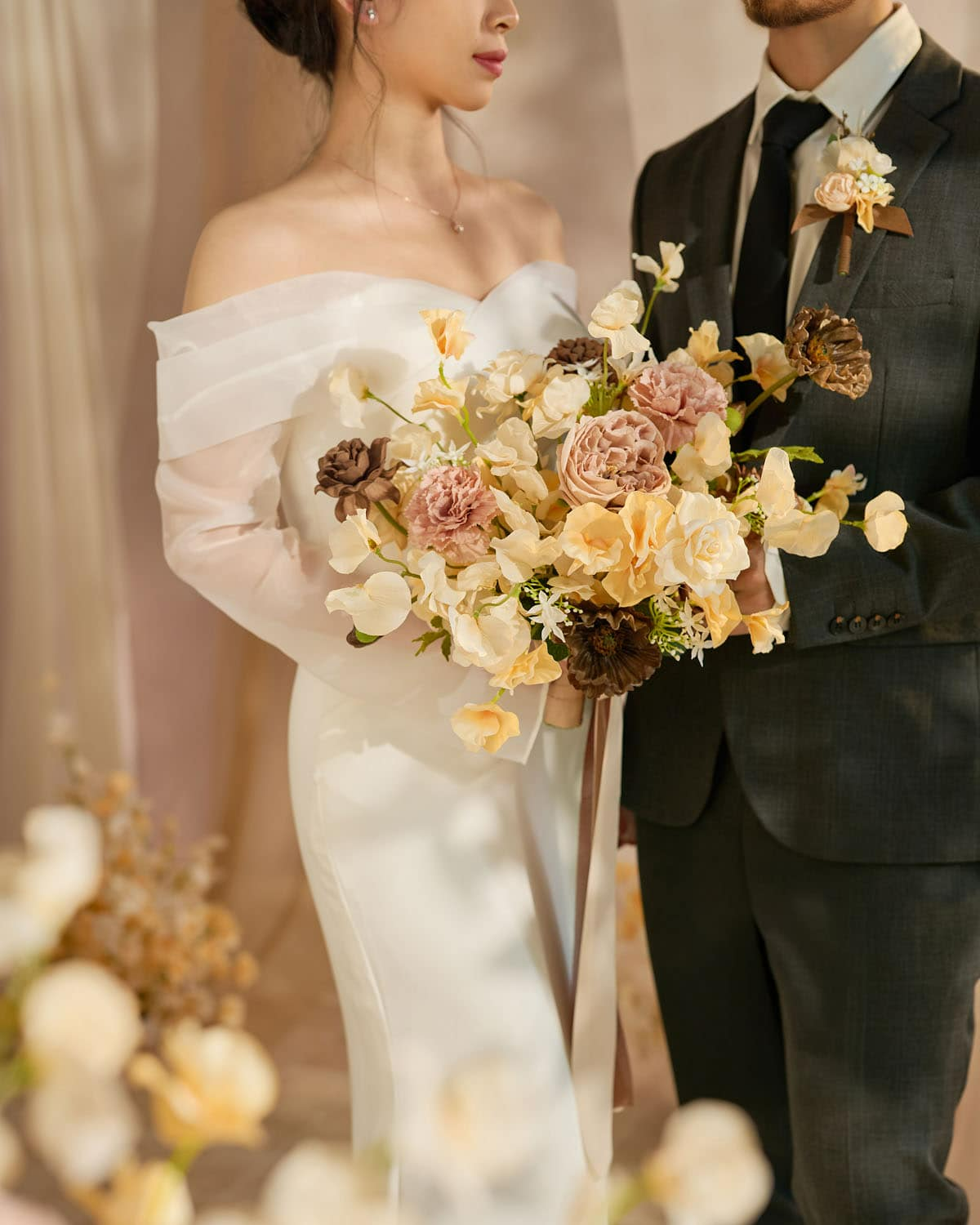
The bridal styling was approached as part of the overall visual system rather than a standalone moment. The bride’s long-sleeve gown, inspired by classic French silhouettes, introduced a sense of quiet structure to the look—clean lines, soft movement, and just enough presence to ground the florals around her.
LETTING BRIDESMAID DRESSES SUPPORT THE PALETTE
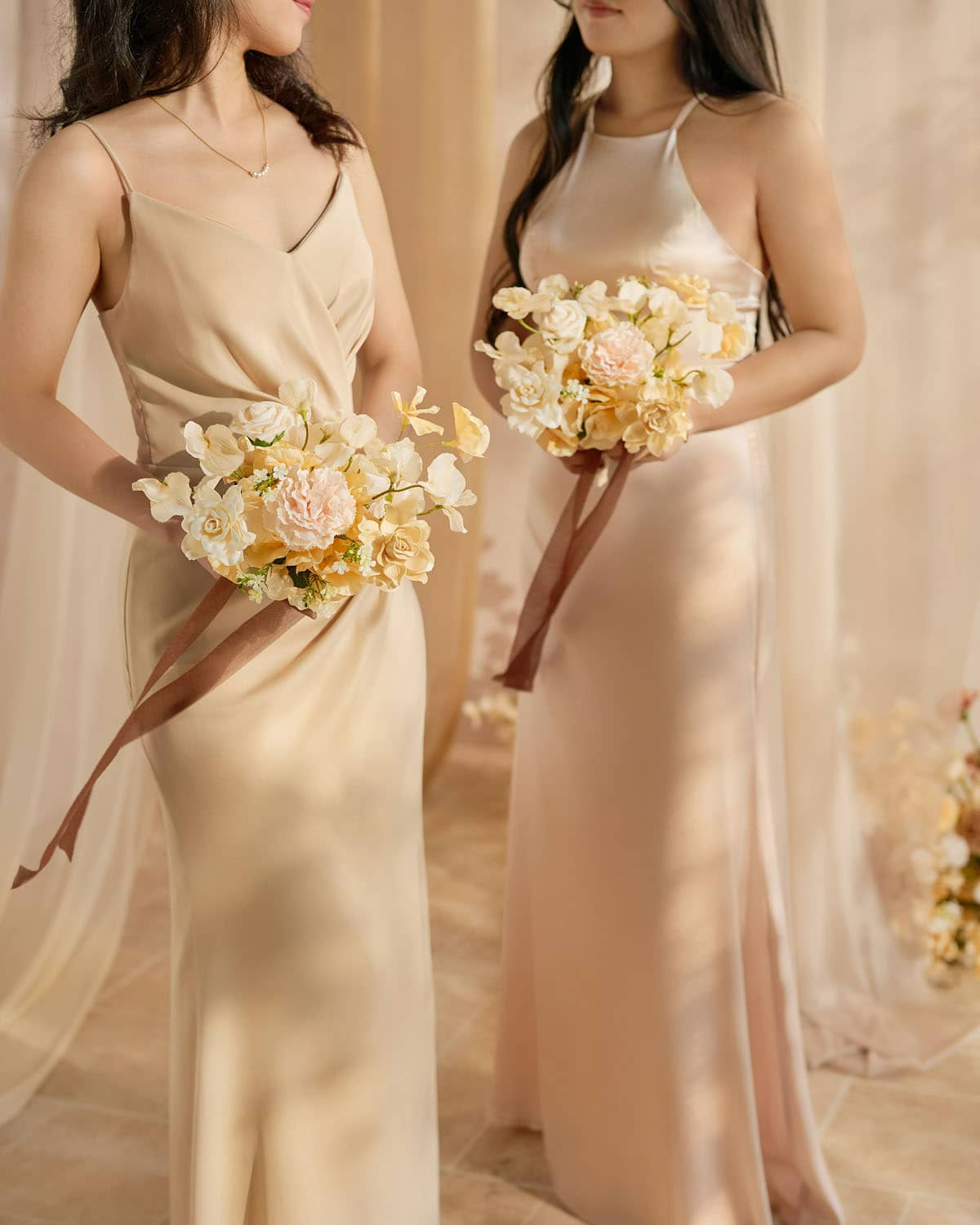
For the bridesmaids, we recommend beige and nude pink tones. Used this way, the dresses settle naturally into the palette, adding depth without competing with the florals. These softer neutrals allow butter yellow, almond, and earth brown accents to remain visually clear, while the interplay between fabric drape and floral texture feels balanced and intentional.
Design insight:
Dresses work best when they support the palette rather than define it—think of them as a visual bridge between flowers, fabrics, and form.
RELATED PRODUCT:
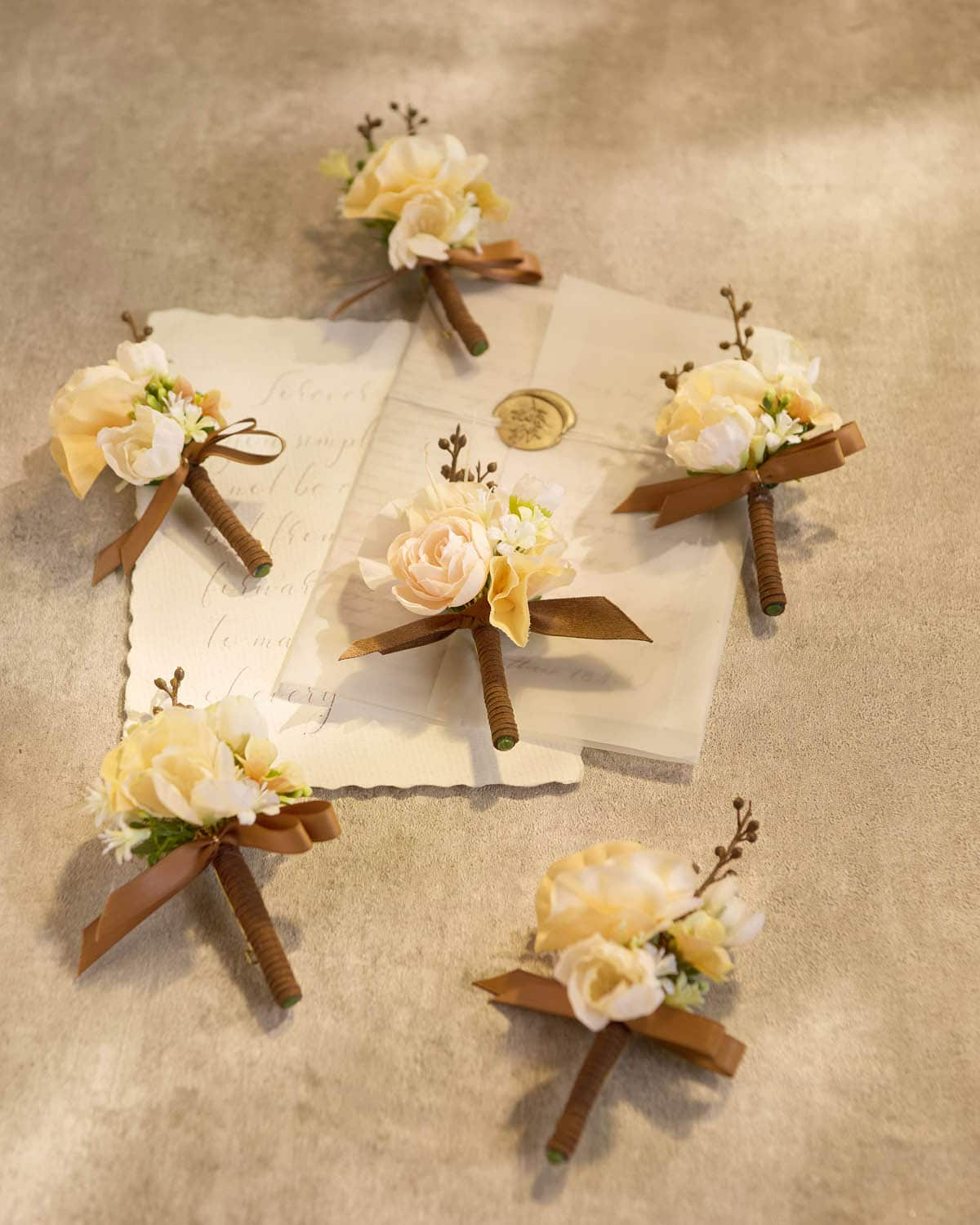
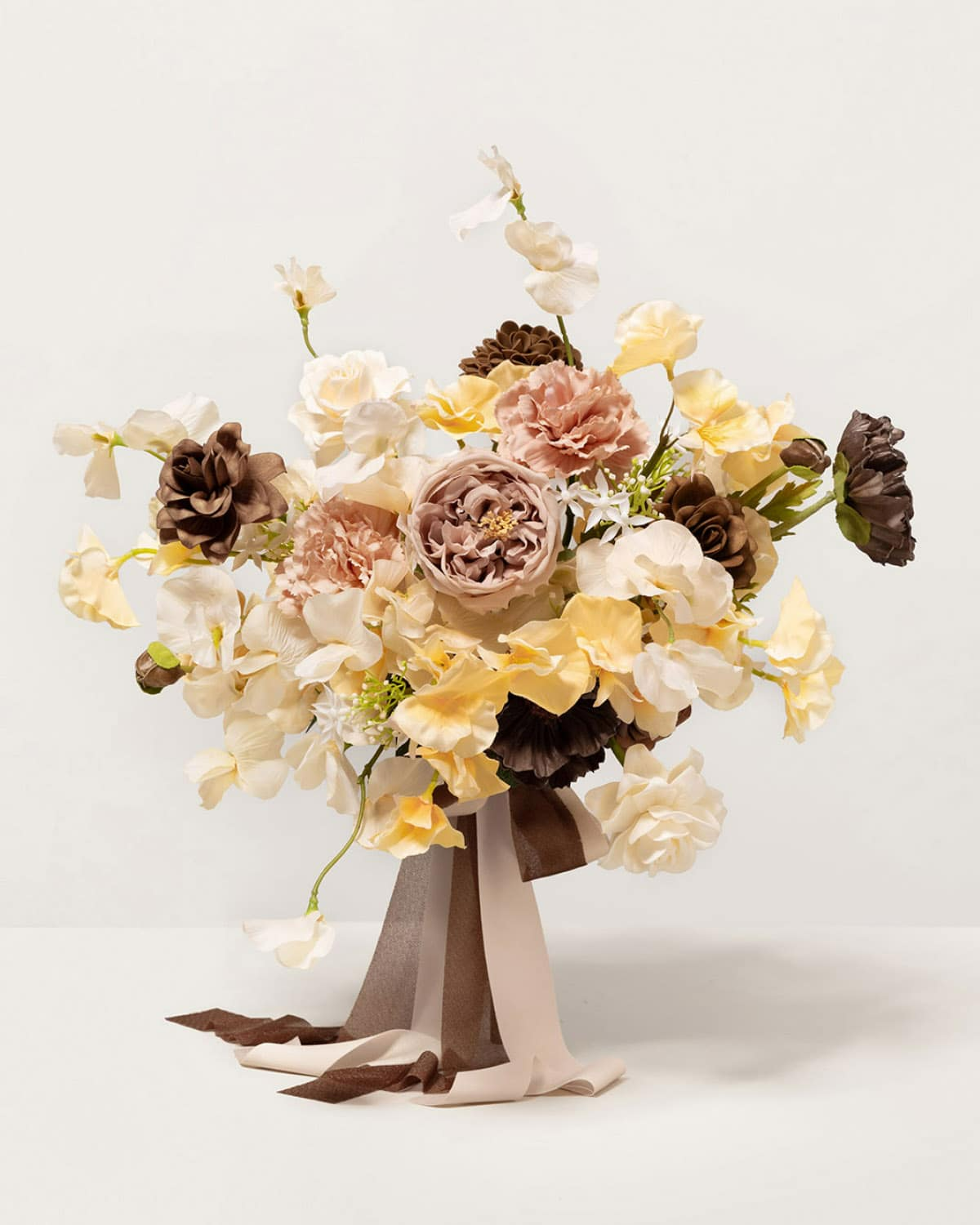
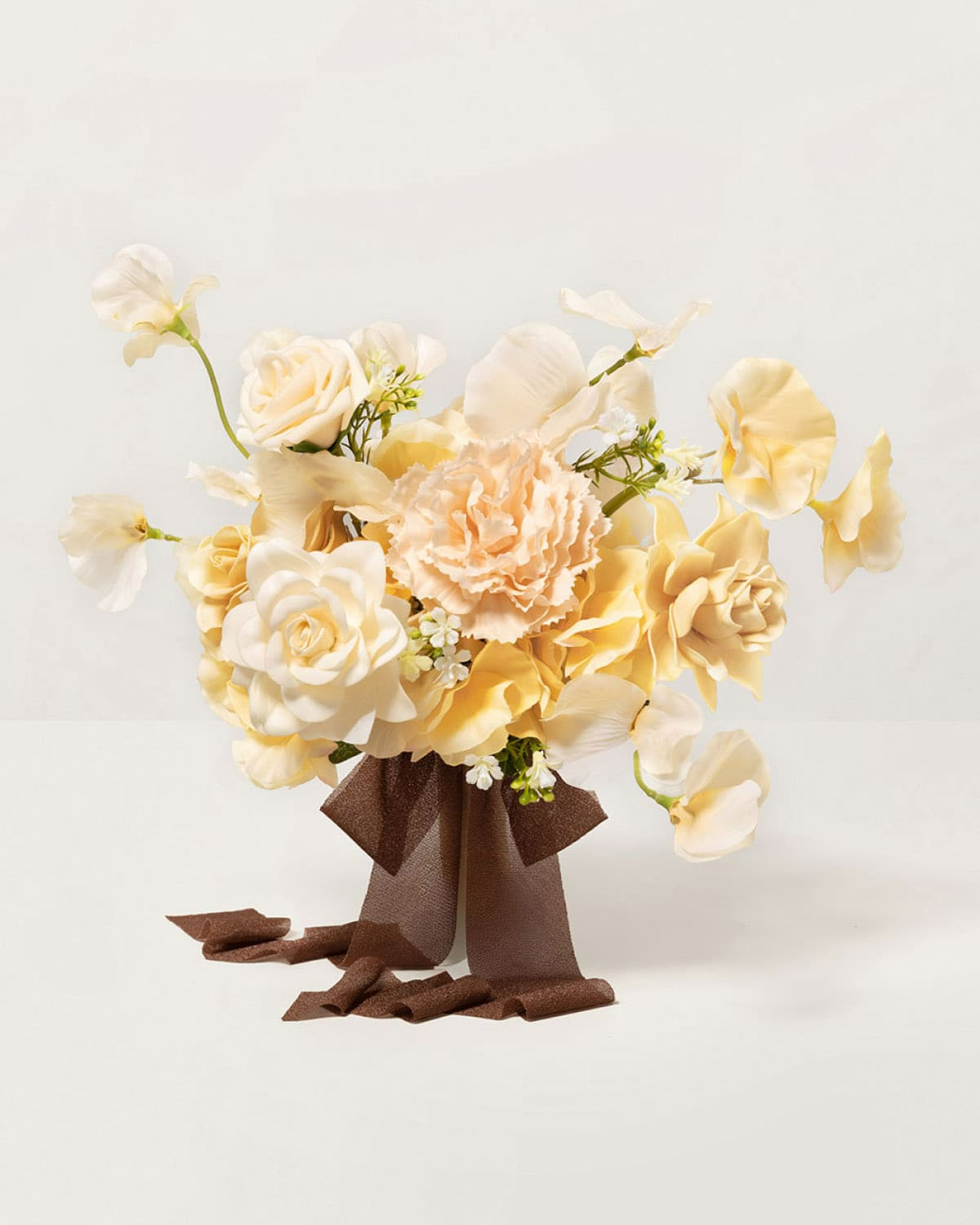
Integrating Spring Wedding Florals Into the Ceremony Space
SWEET PEAS–CENTERED FLORAL MEADOWS
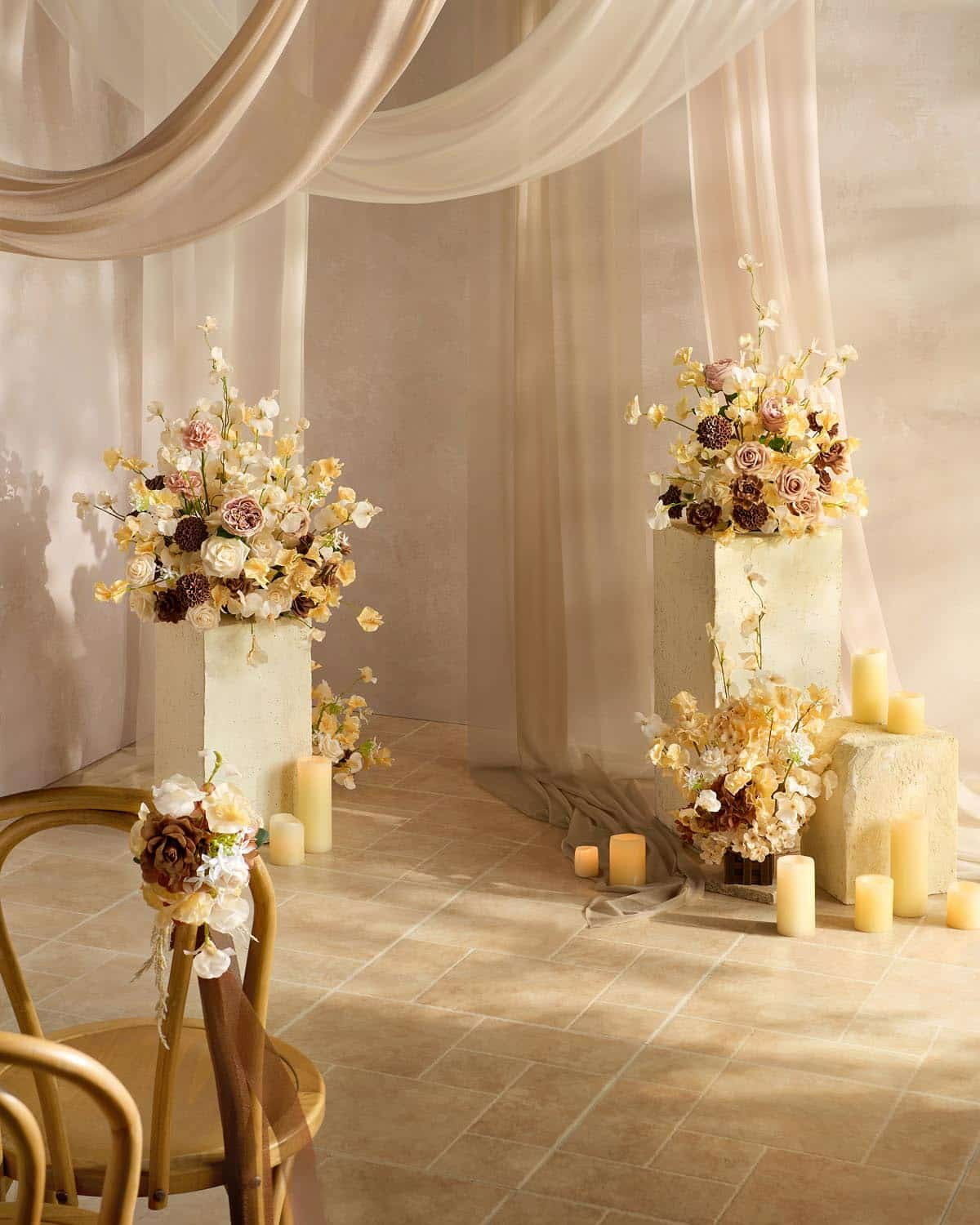
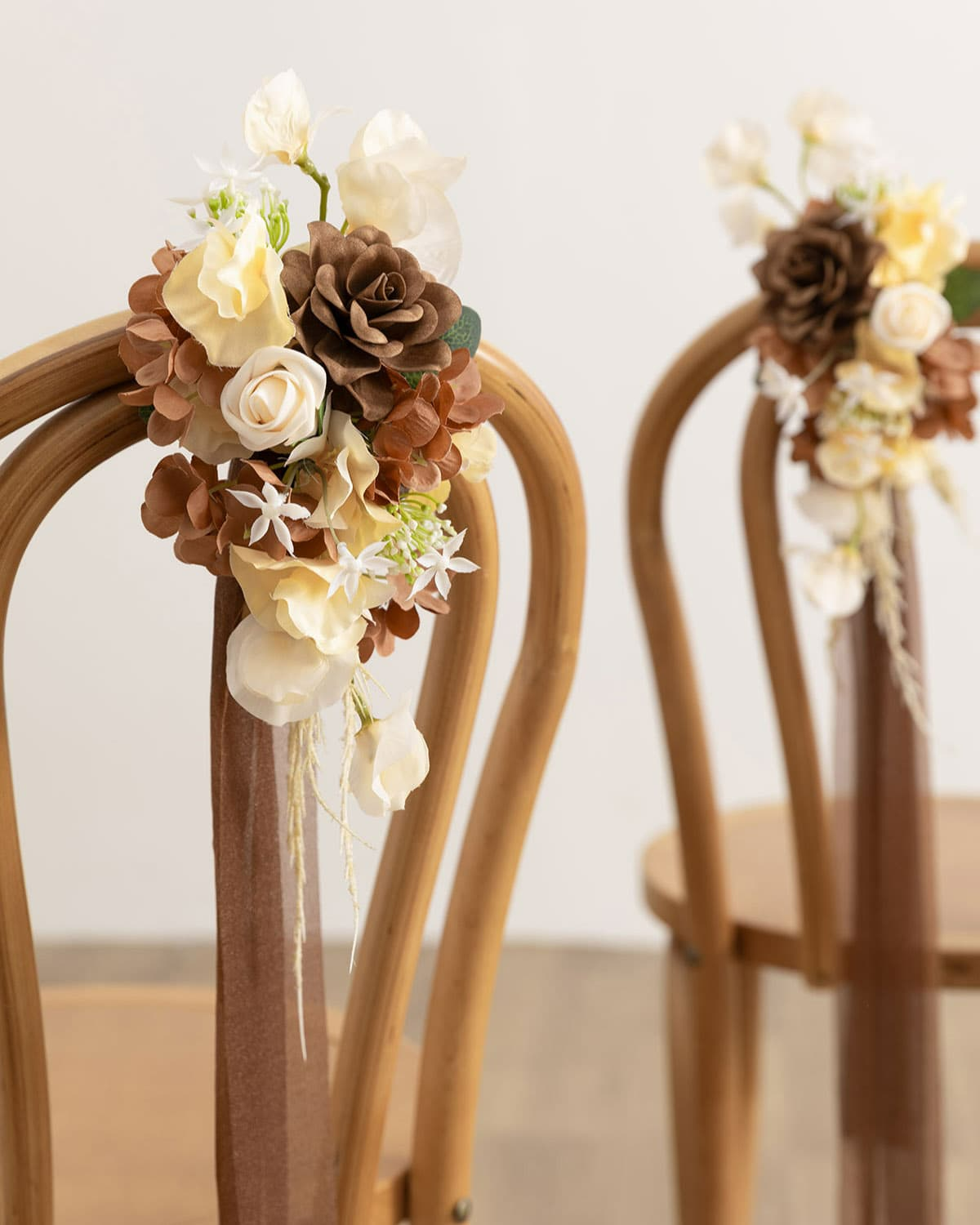
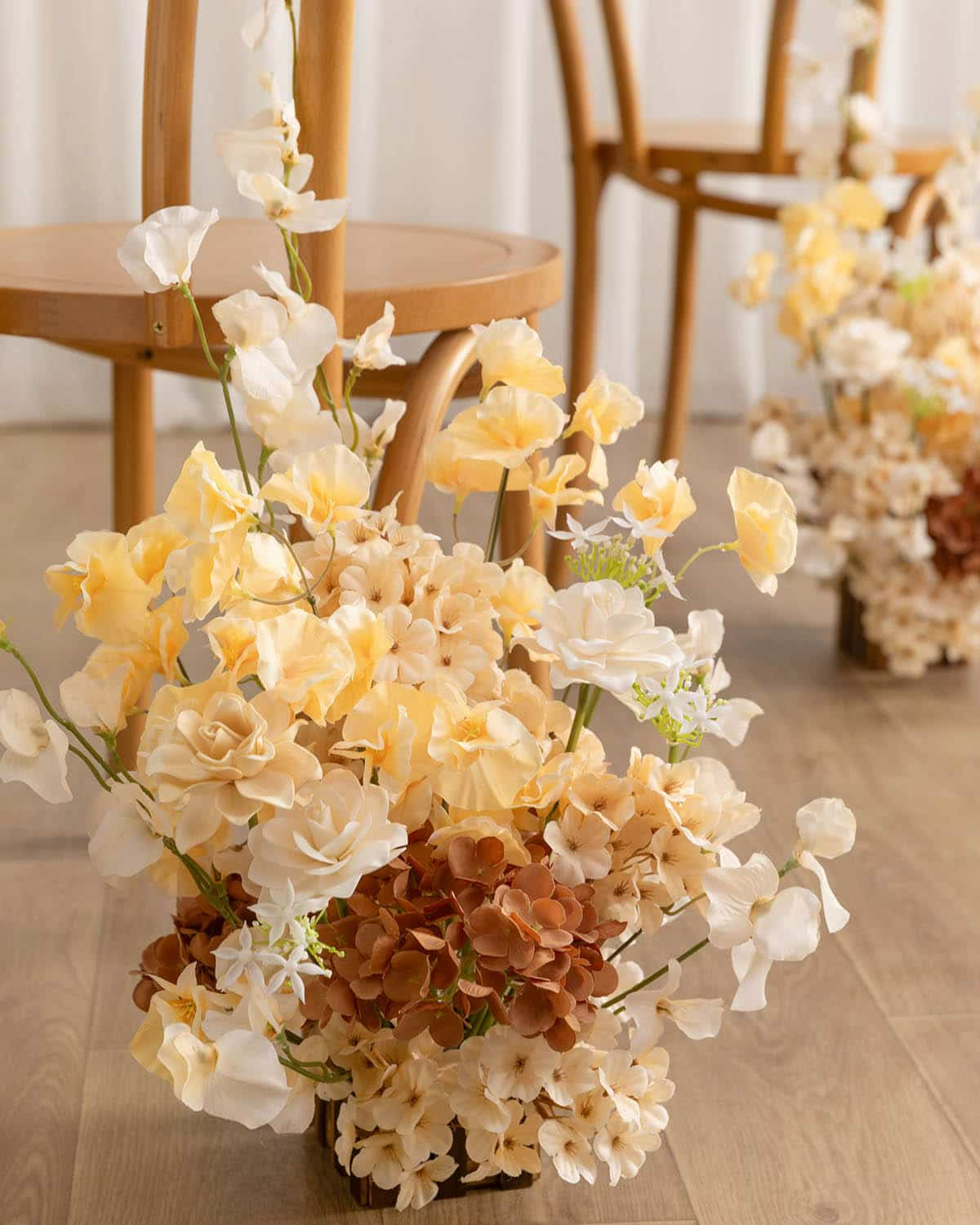
In the ceremony space, the spring wedding floral language established in the bouquet was gently expanded into the architecture. Lifelike sweet peas, supported by roses, carnations, and poppies, were arranged into loose, meadow-like compositions at the base of textured plaster columns. Rather than feeling deliberately placed, the flowers appear to have grown into the space—light, slightly irregular, and full of movement. This approach allows spring wedding florals to feel immersive without becoming overwhelming—particularly suited to an intimate wedding, where the experience is meant to be felt up close, even within a venue rich in architectural character.
WEDDING DRAPING THAT SUPPORTS, NOT COMPETES
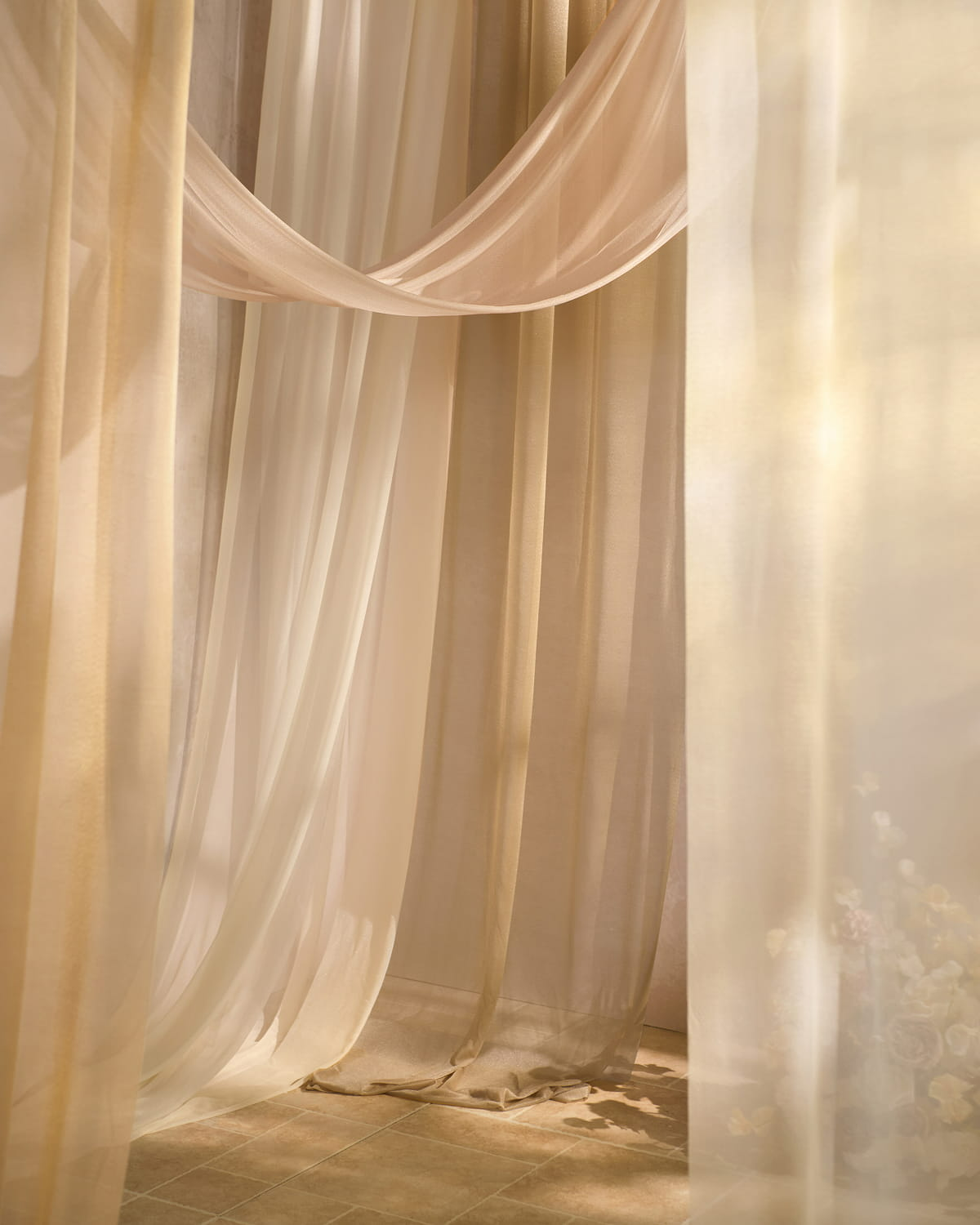
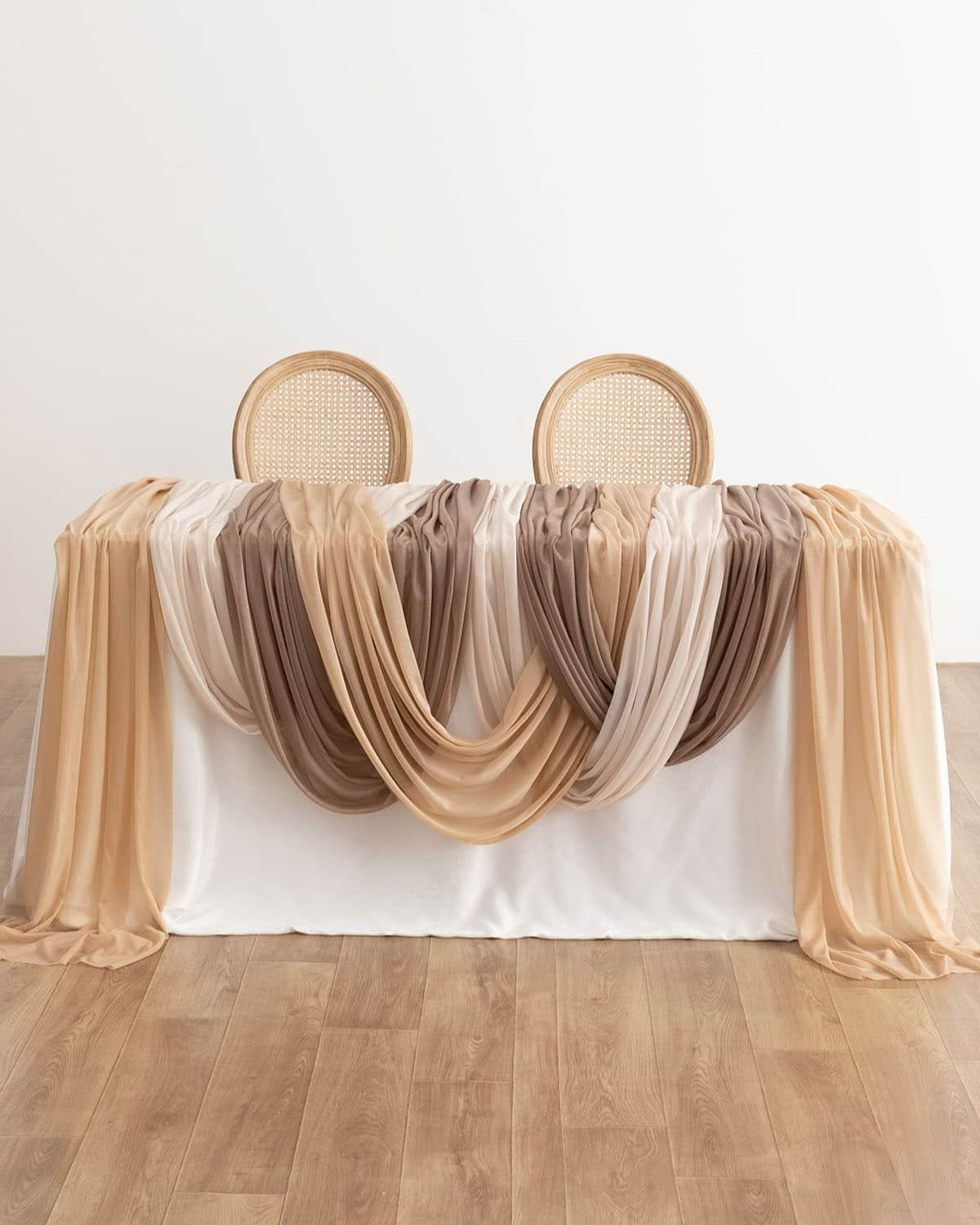
Above the ceremony space, soft wedding draping in cream, nude, and almond tones was layered asymmetrically from overhead. The goal was never to frame the ceremony too precisely, but to soften vertical lines and gently guide the eye toward the florals and natural light. By keeping the fabric palette close to the surrounding walls, the draping blends seamlessly into the venue rather than competing with it. The result is an atmosphere that feels airy, natural, and quietly romantic.
Design Insight:
Repeating bouquet flowers in ceremony arrangements creates visual continuity while keeping the overall floral design relaxed and intentional.
RELATED PRODUCT:
Reception Table Styling for an Intimate Spring Wedding
CENTERPIECES DESIGNED TO VARY
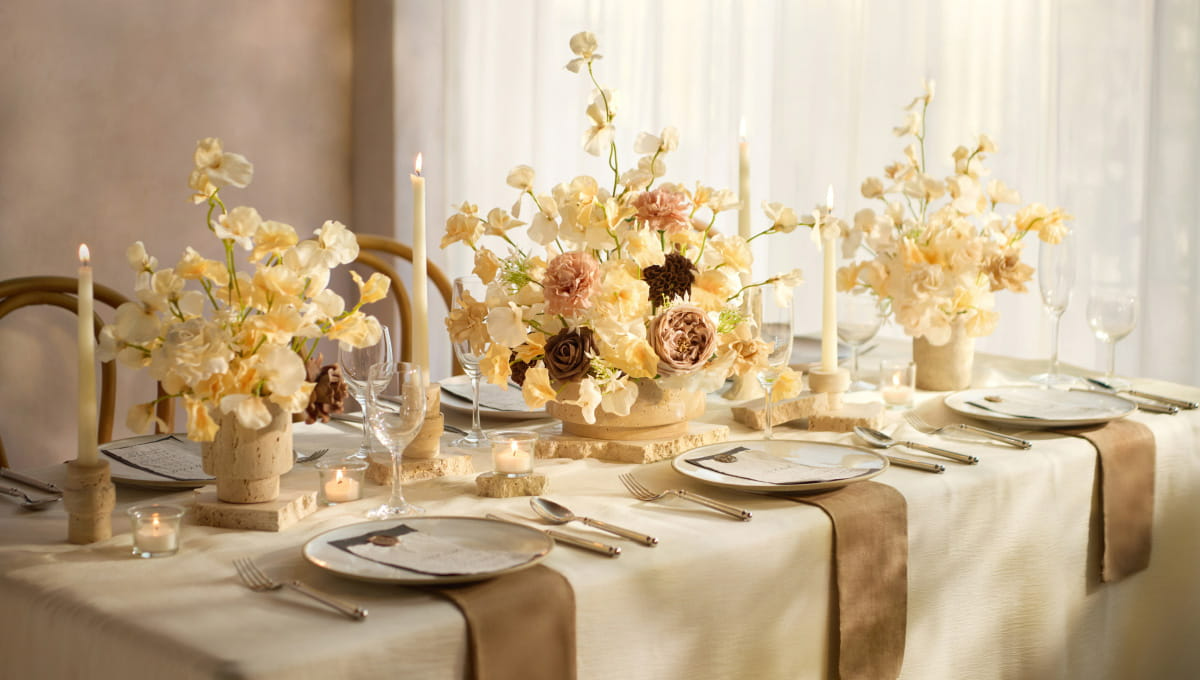
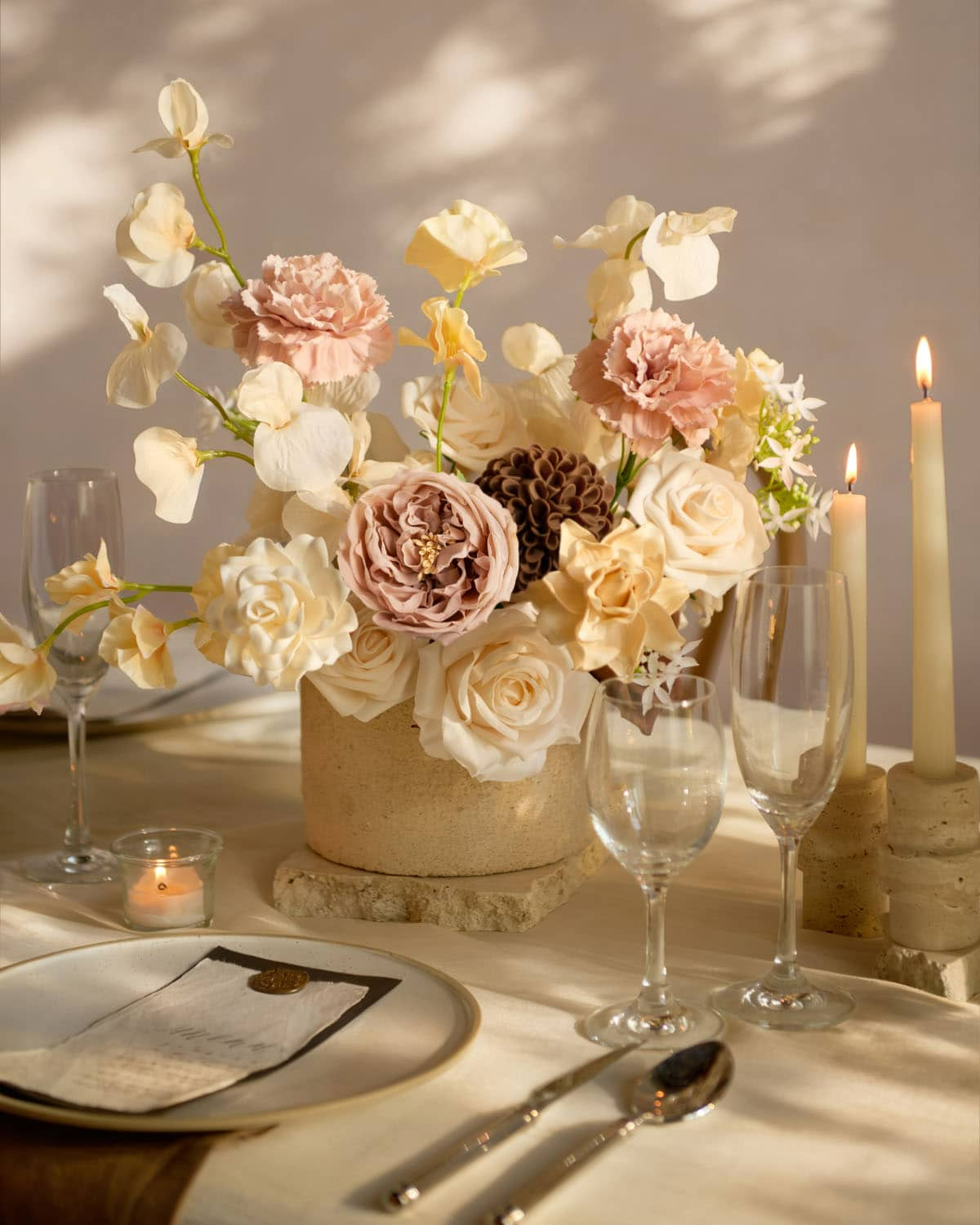
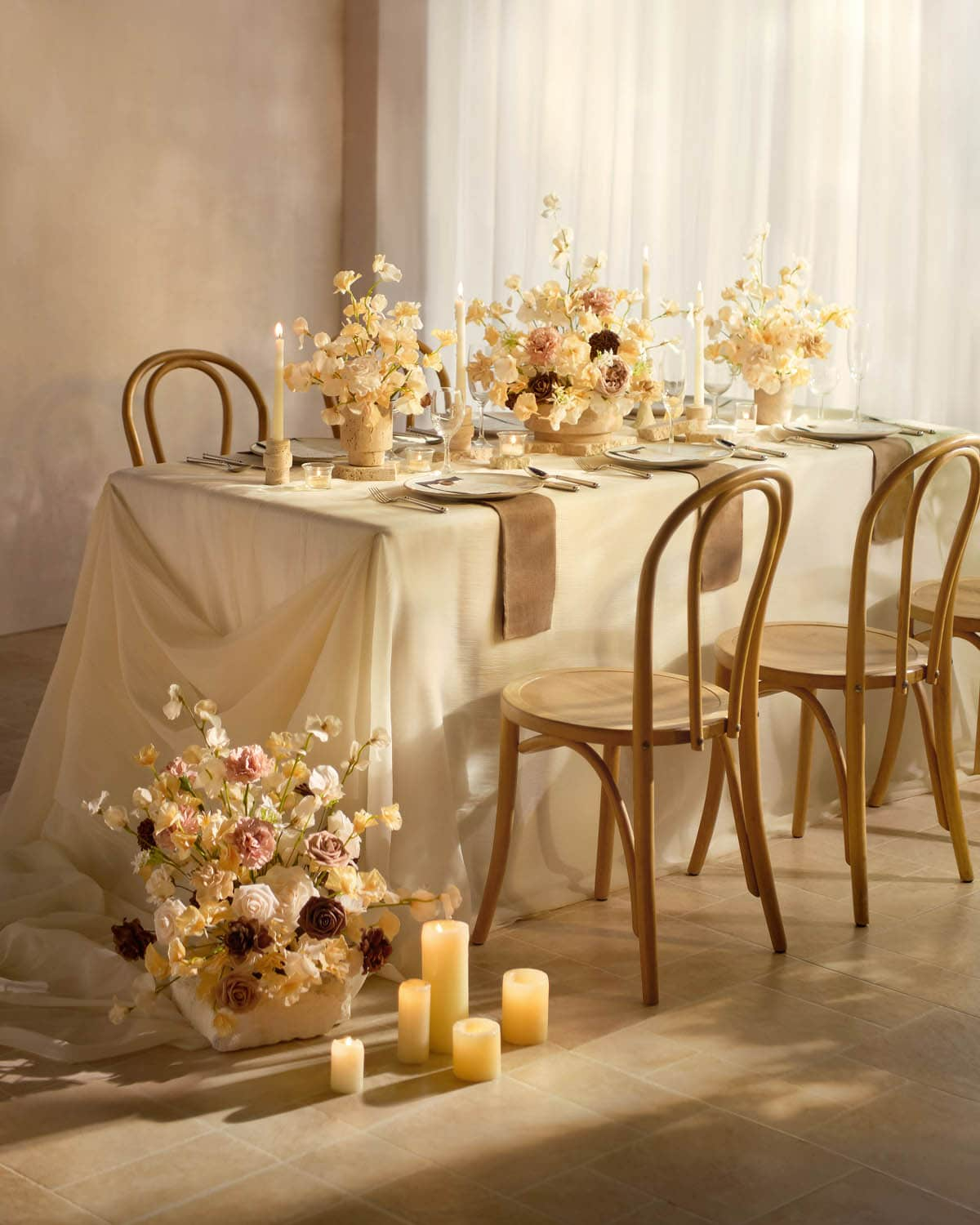
At the reception table, we carried the same philosophy of cohesion without rigidity. Centerpieces were designed to shift subtly along the length of the table, each one anchored by handcrafted sweet peas and adjusted with small variations in flower mix and tone. This gentle evolution creates rhythm and visual interest without breaking the overall harmony.
MATERIALS THAT FEEL “FOUND, NOT ARRANGED”
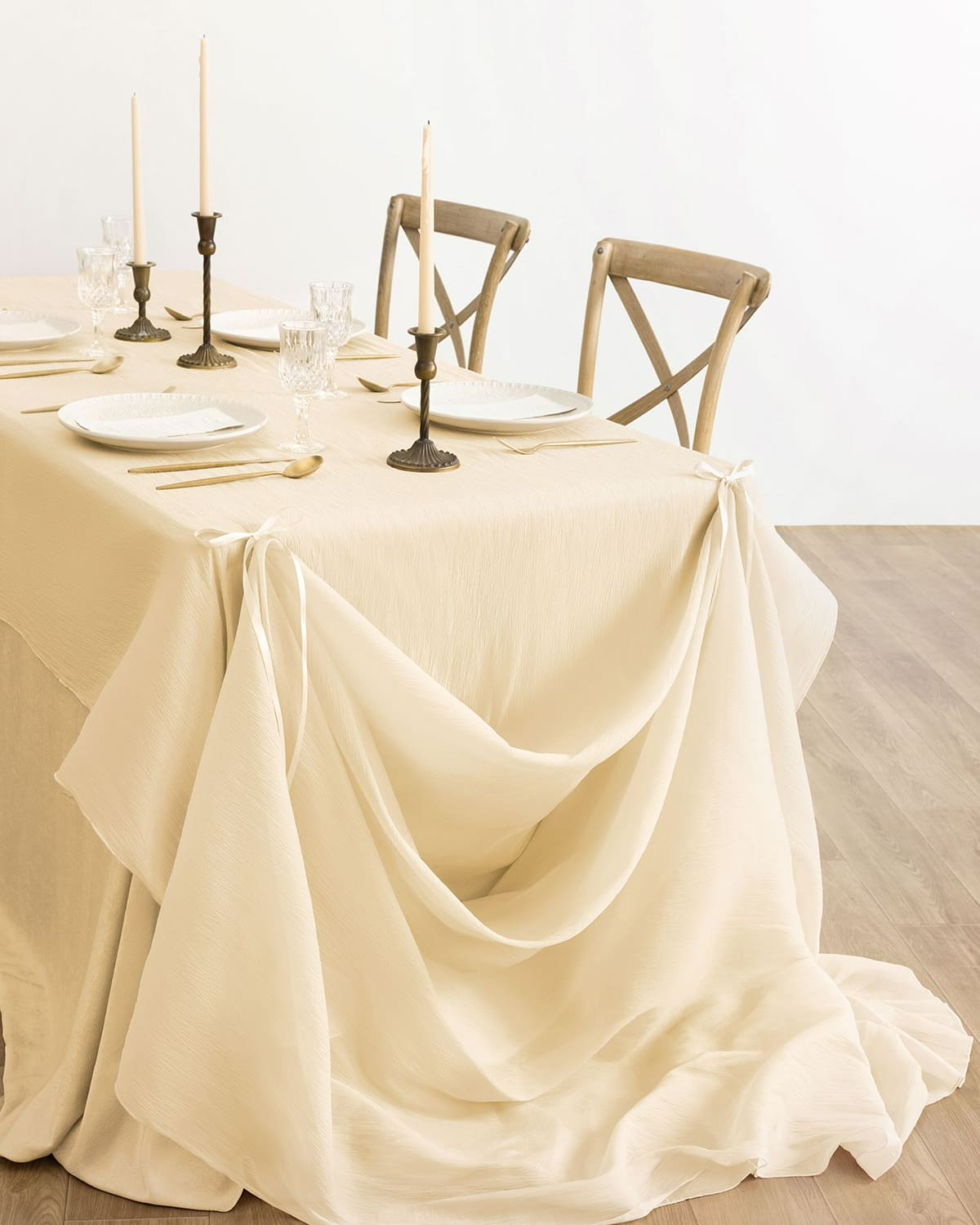
The table styling was intentionally restrained. Limestone slabs were placed beneath vases and candle holders, introducing a sense of permanence and quiet sophistication. Their matte, mineral texture contrasts beautifully with the softness of the florals and and the fluidity of fabrics like the wedding draping. Tawny beige satin tablecloths were allowed to drape naturally at the table ends, while earth brown linen napkins added warmth and depth, echoing the darker tones of the Earth Brown & Butter Yellow wedding color palette. Paired with clear glassware, sleek silver cutlery, and gold-rimmed ceramic plates, the table feels refined yet unforced—composed, but never overdesigned.
Design Insight:
For an intimate wedding, subtle variation within a consistent floral base makes long tables feel curated rather than repetitive.
RELATED PRODUCT:
Design Highlight: Sweet Peas and Limestone in Conversation
SIGNATURE FLOWER: WHY WE CHOSE SWEET PEAS
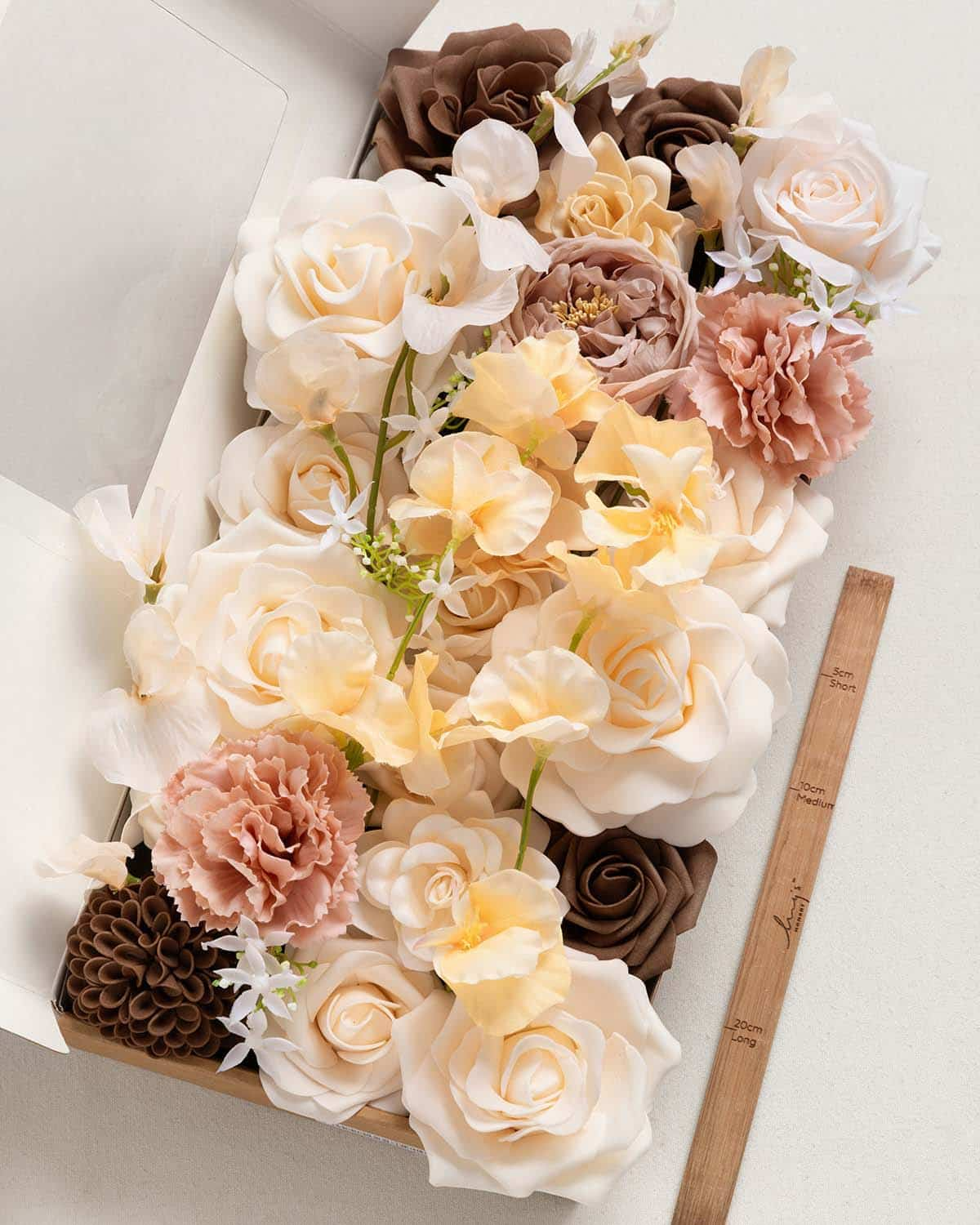
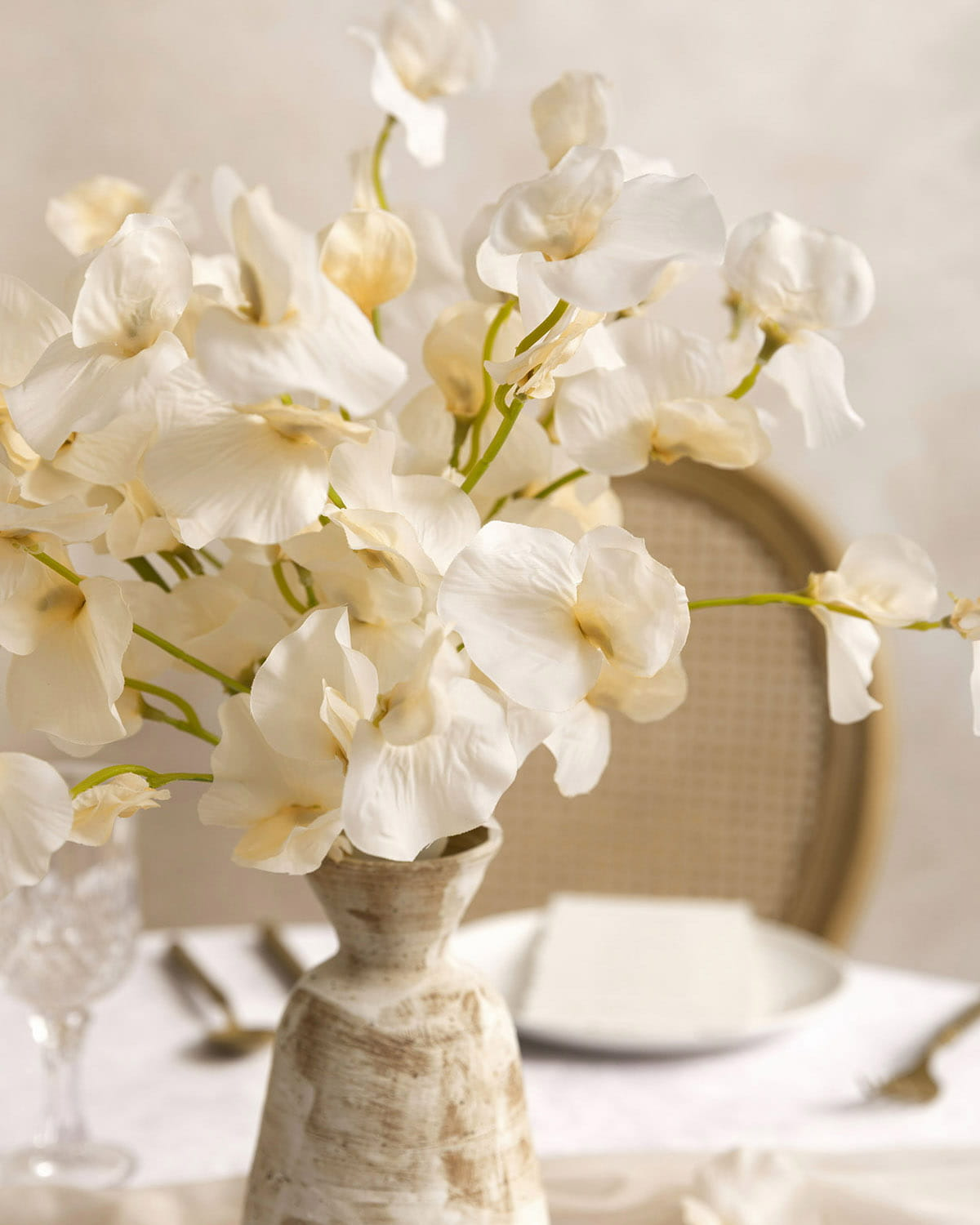
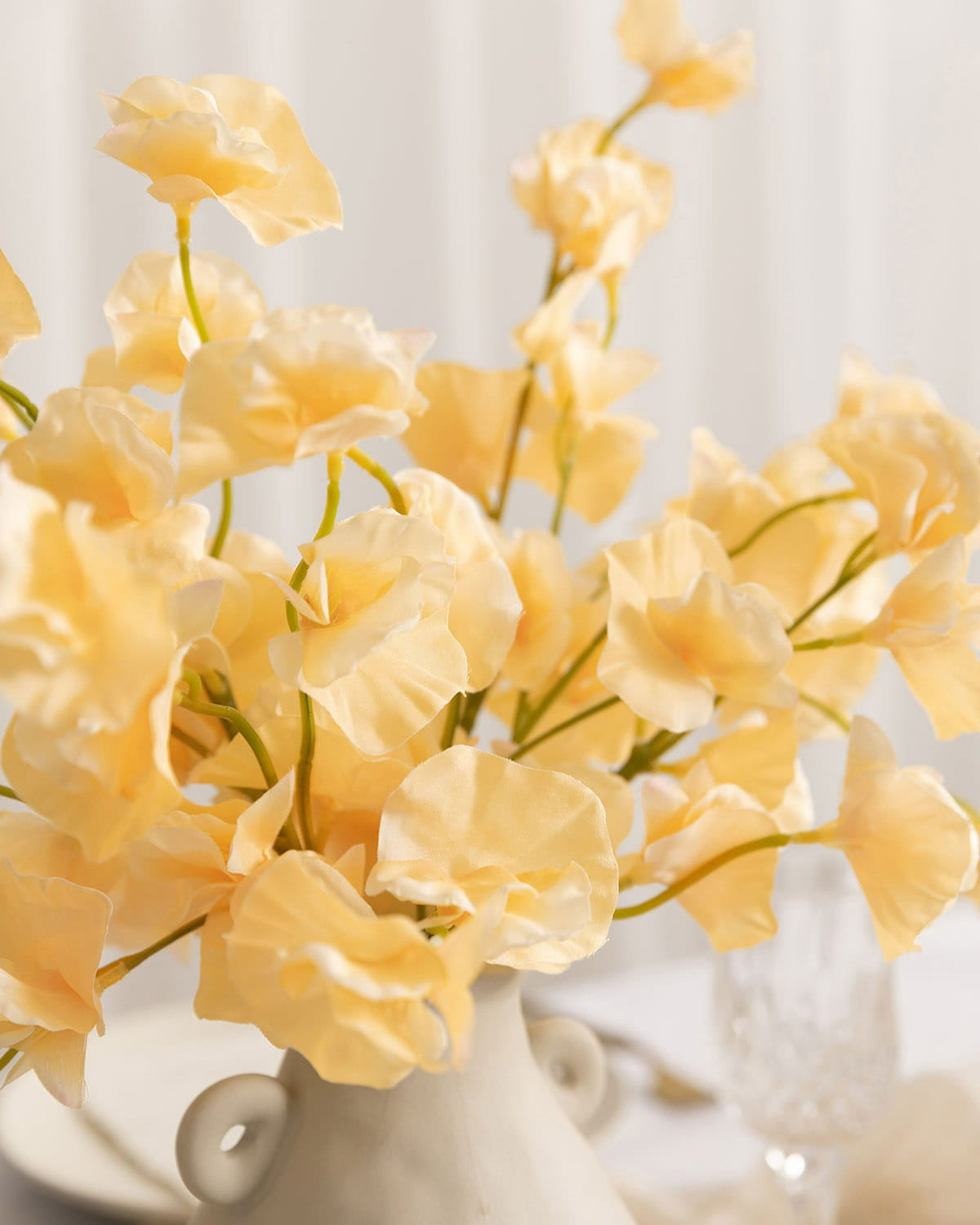
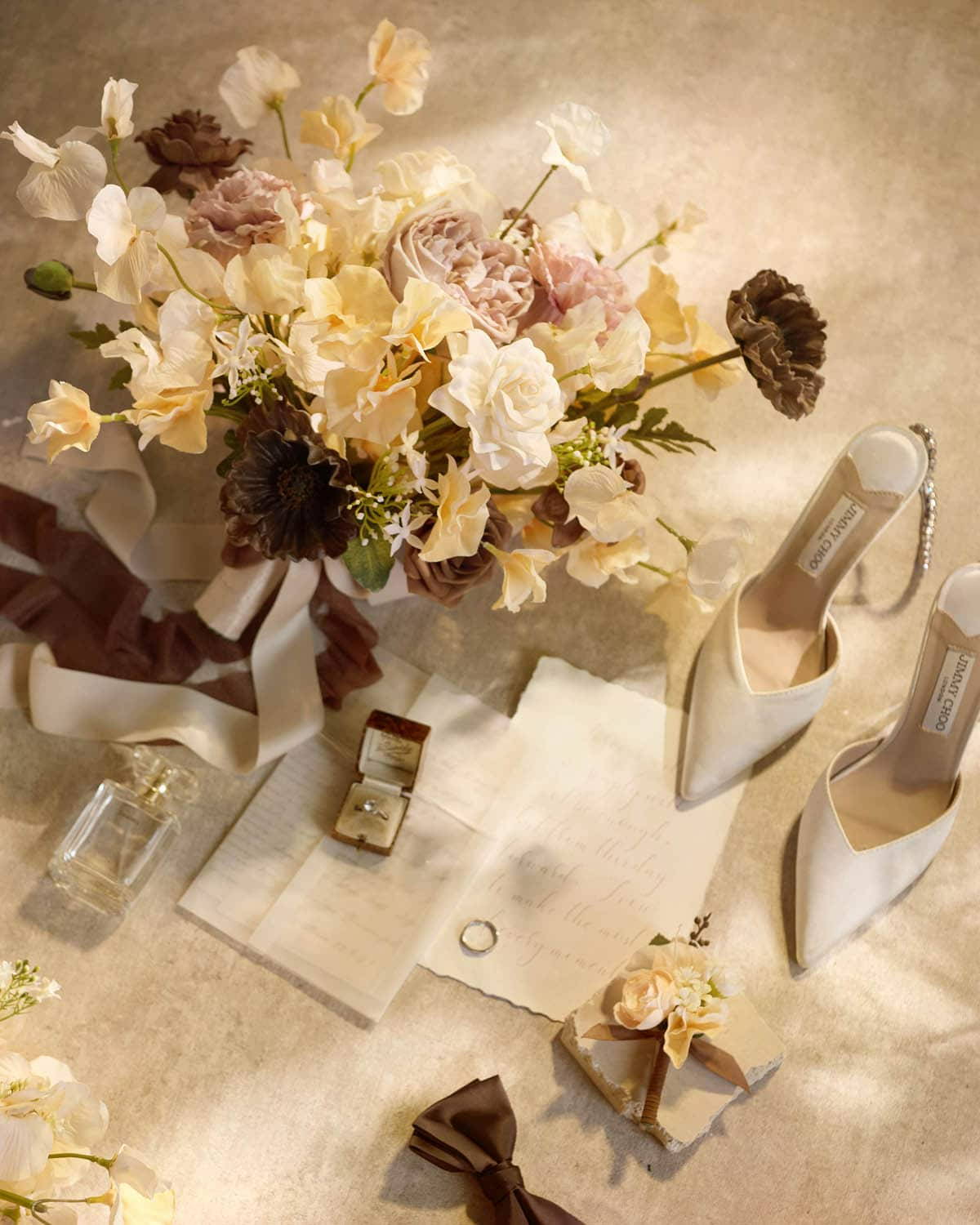
Across the entire wedding, the dialogue between softness and structure becomes one of the most defining design elements. Sweet peas appear throughout the celebration as a defining spring wedding floral choice—woven into bouquets, ceremony installations, and reception centerpieces—not as a decorative statement, but as a unifying visual thread. Their light, airy form brings movement to each arrangement, helping the florals feel natural and approachable while maintaining a refined silhouette.
MATERIAL FOCUS: LIMESTONE AS A CHIC NEUTRAL
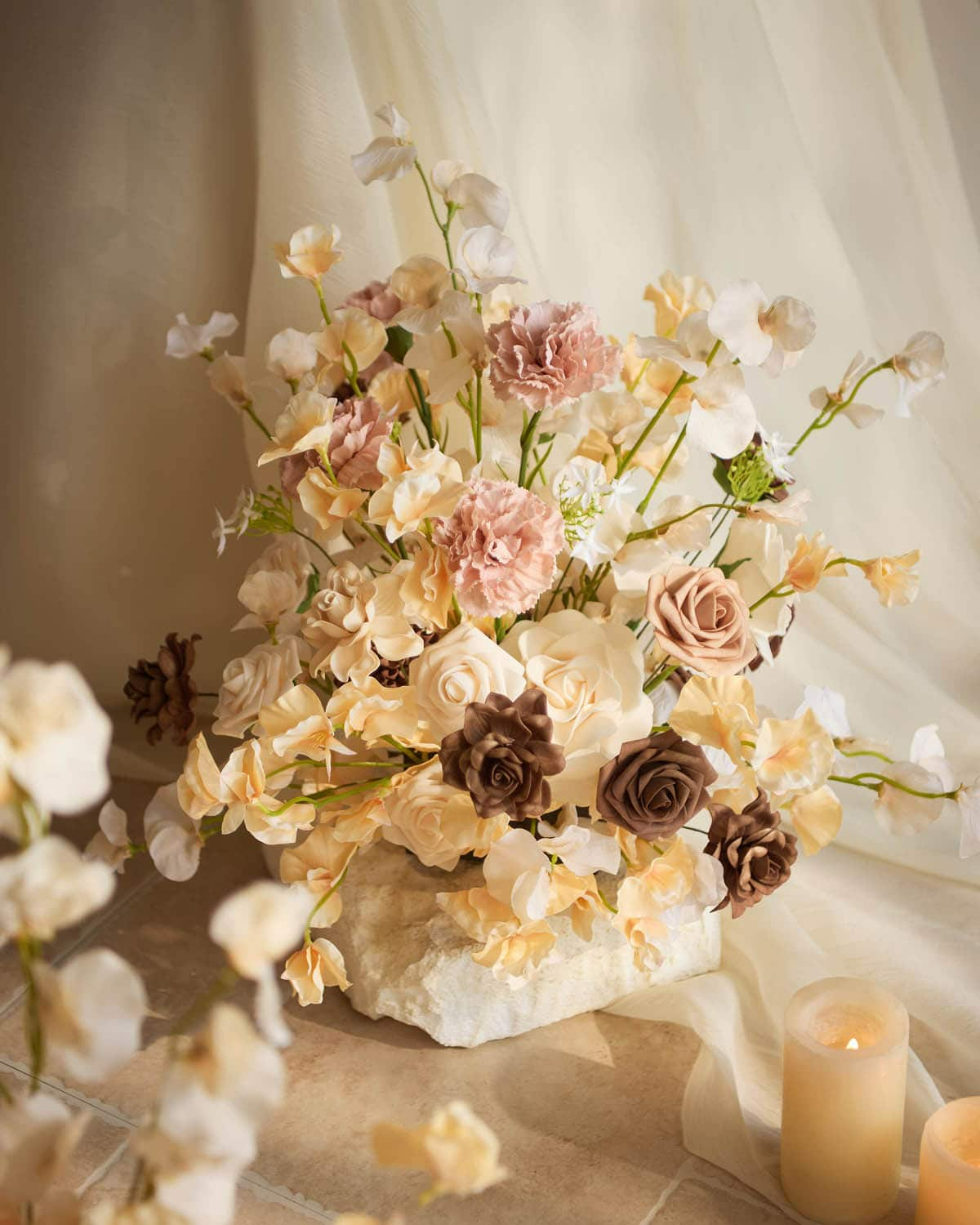
Balancing this softness, limestone surfaces ground the design in a way that feels both modern and timeless. Introduced beneath vases, candles, and in select floor arrangements, the stone’s muted texture and natural weight create a subtle contrast to the delicacy of the flowers and flowing fabrics. We often turn to materials like limestone when we want a space to feel intentional rather than styled—its presence sharpens the overall composition, allowing floral colors and fabric tones to feel calmer, clearer, and more refined by comparison.
Design Insight:
Pair one soft floral element with a structured material to create contrast without introducing additional colors or visual noise.
Designing a Spring Wedding That Can Be Reinterpreted
This Earth Brown & Butter Yellow spring wedding, designed with an intimate wedding in mind, is less about a fixed look and more about a flexible system. Each color, spring wedding floral choice, and material was selected to work together, while remaining adaptable across different spaces, scales, and personal styles.
Rather than following a preset theme, we encourage couples to see this design as a foundation. By confidently mixing and matching florals, fabrics, and materials beyond the original setting, it becomes possible to create a spring wedding that feels cohesive yet deeply personal—styled with intention and designed to evolve.